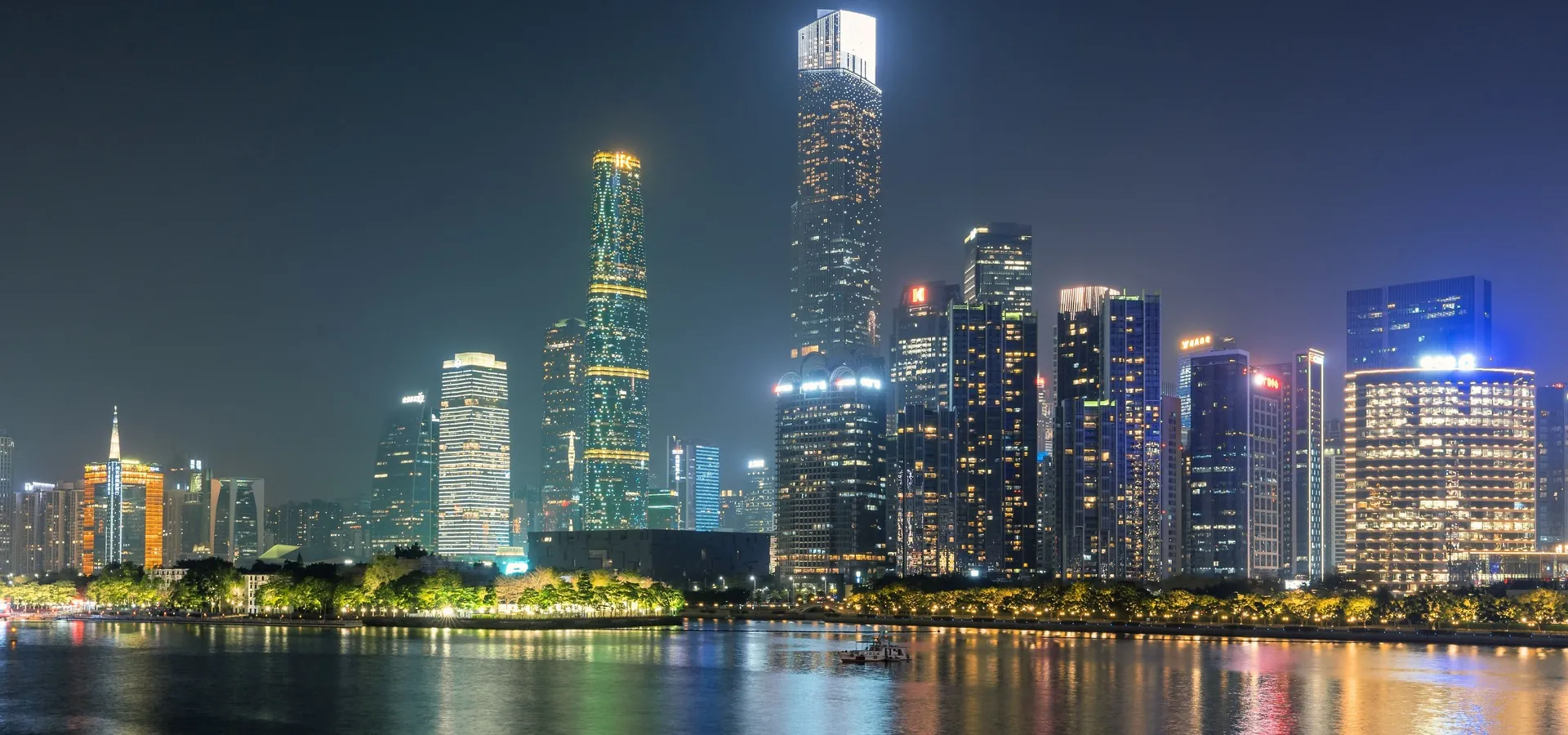
Guangzhou — Where China's Best Food City Has Been Hiding in Plain Sight
Let's be honest: Guangzhou (广州) doesn't shout for attention the way Shanghai does. It doesn't have Beijing's imperial swagger or Chengdu's panda cachet. What it has is much more subversive: it may be the single greatest eating city in China — a place where you can eat world-class dim sum for breakfa
Where is Guangzhou?
Located in South China with a population of 18.8 million.
See routes including Guangzhou
When to Visit - Month by Month
| Month | Temp | Rain | Crowd | Rating | Tips |
|---|---|---|---|---|---|
| Jan | 10~18°C | Low | Low | ★★ | Mild. Good season |
| Feb | 11~19°C | Low | Low | ★★ | Comfortable |
| Mar | 15~22°C | Medium | Medium | ★★★★ | Cherry blossoms |
| Apr | 19~26°C | Medium | Medium | ★★★★ | Warm. Rain begins |
| May | 23~30°C | High | Medium | ★★★ | Hot. Humid |
| Jun | 26~33°C | VHigh | Medium | ★★ | Typhoon season |
| Jul | 27~34°C | VHigh | Low | ★ | Extreme heat |
| Aug | 27~34°C | VHigh | Low | ★ | Hot. Typhoons |
| Sep | 25~31°C | High | Medium | ★★ | Still hot |
| Oct | 21~29°C | Low | High | ★★★★★ | Best month. Dry |
| Nov | 16~25°C | Low | Medium | ★★★★ | Pleasant |
| Dec | 11~20°C | Low | Low | ★★ | Mild. Dry |
Compare climate with other cities
Attractions - Ranked
Must-See (Don,t Miss These)
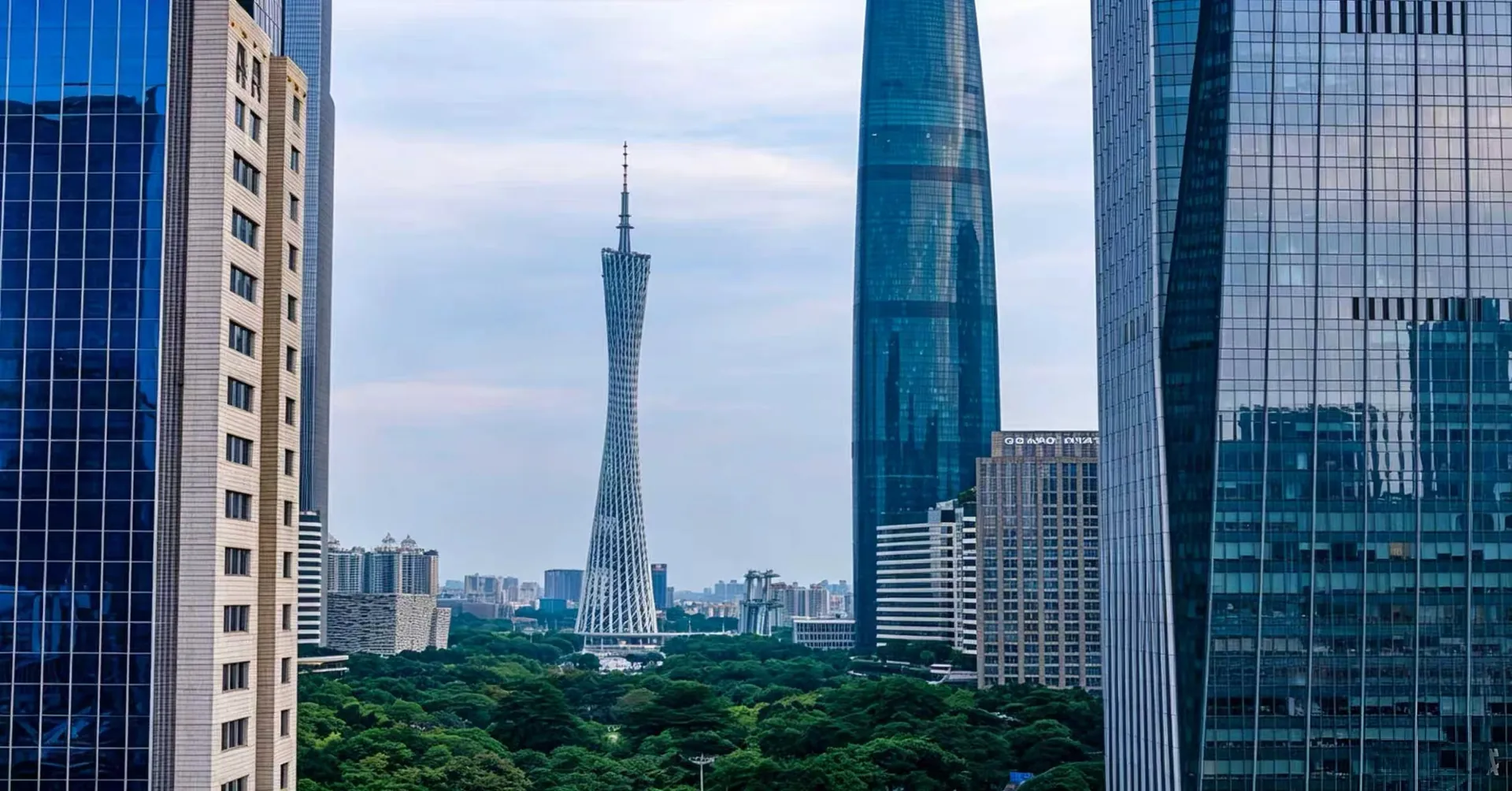
Canton Tower & night view
Iconic 600m tower, Guangzhou''s most recognizable landmark. The hyperboloid lattice structure is stunningly illuminated at night. The observation deck at 488m offers the best panoramic view.
| Detail | Info |
|---|---|
| Open | 9:30 AM - 10:30 PM |
| Admission | 150 yuan |
| Getting there | Metro Line 3/APM to Canton Tower |
| Time needed | 1.5 hours |
Tip: Visit at sunset. The tower lights change colors on different nights. Cross the river to Haixinsha Park for the best free photo spot.
Morning dim sum (yum cha)
Cantonese dim sum is UNESCO-recognized cultural heritage. Locals fill tea houses from 7 AM for bamboo baskets of har gow (shrimp dumplings), siu mai, and char siu bao.
| Detail | Info |
|---|---|
| Best time | 7:00-11:00 AM |
| Price | 40-80 yuan per person |
| Top restaurants | Guangzhou Restaurant, Tao Tao Ju, Dian Dou De |
Tip: Go to old-school Guangzhou Restaurant or Panxi Restaurant. Must-try: har gow, siu mai, phoenix claws, and egg tarts.
Chen Clan Ancestral Hall
Magnificent Qing Dynasty ancestral temple (1894) now housing the Guangdong Folk Art Museum. Masterpiece of Lingnan architecture with stunning wood and stone carvings.
| Detail | Info |
|---|---|
| Open | 8:30 AM - 5:30 PM |
| Admission | 10 yuan |
| Getting there | Metro Line 1 to Chen Clan Academy |
| Time needed | 1-1.5 hours |
Tip: Look up at the roof ridges for the ceramic figurines depicting Chinese mythology scenes.
Worth a Visit (If You Have Time)
Shamian Island colonial architecture
Peaceful island on the Pearl River, former British and French concession. Over 150 preserved European-style buildings - neoclassical, Gothic, and Baroque - lining leafy avenues.
| Detail | Info |
|---|---|
| Open | 24/7, free |
| Getting there | Metro Line 1 to Huangsha Station |
| Time needed | 1.5-2 hours |
Tip: Walk down Shamian Street and explore the side lanes. The former Customs House and French Catholic Church are highlights.
Baiyun Mountain hike
Guangzhou''s White Cloud Mountain (427m) with forested trails, scenic overlooks, and tea houses. The cable car ride up offers sweeping city views.
| Detail | Info |
|---|---|
| Open | 6:00 AM - 9:00 PM |
| Admission | 5 yuan; cable car 25 yuan |
| Getting there | Metro Line 2 to Baiyun Park |
| Time needed | 3-4 hours |
Tip: Take the cable car up and walk down. Go on a clear morning before the mist rolls in.
Cantonese opera at Lychee Bay
Traditional Cantonese opera at Liwan Lake Park. The ornate waterside stage and colorful costumes create a mesmerizing cultural experience.
| Detail | Info |
|---|---|
| Best time | Evenings (check schedule) |
| Admission | Free (outdoor performances) |
| Getting there | Metro Line 5 to Zhongshanba |
| Time needed | 1-2 hours |
Tip: Outdoor performances near Lychee Bay stage are free. Indoor theater may have English subtitles on some dates.
Tourist Traps to Skip
| Trap | Why to Skip |
|---|---|
| Shangxiajiu tourist markets | Shangxiajiu pedestrian street is packed with counterfeit goods and generic souvenirs aimed at tourists. Visit Chen Clan Hall or Shamian Island instead |
Suggested Itineraries
1 Day in Guangzhou
| Time | Activity |
|---|---|
| 7:00-9:00 | Morning dim sum at Guangzhou Restaurant |
| 9:30-11:00 | Chen Clan Ancestral Hall |
| 11:30-12:30 | Shamian Island colonial walk |
| 1:00-3:00 | Canton Tower observation deck |
| 3:30-5:30 | Baiyun Mountain cable car + hike |
| 6:00-8:00 | Dinner: claypot rice on Wende Road |
| 8:30-9:30 | Canton Tower night view + Pearl River walk |
2 Days in Guangzhou
| Time | Activity |
|---|---|
| 9:00-12:00 | Yuexiu Park + Zhenhai Tower |
| 12:30-1:30 | Lunch: wonton noodles |
| 2:00-5:00 | Lychee Bay + Cantonese opera |
| 6:00-9:00 | Beijing Road night market |
Day Trips
| Destination | Transport | Time | Why Go |
|---|---|---|---|
| Foshan | Metro 40 min | Half-day | Kung fu + Cantonese culture |
| Kaiping Diaolou | Bus 2h | Full day | UNESCO watchtowers |
Food Guide
Guangzhou is the birthplace of Cantonese cuisine — the most globally influential Chinese culinary tradition — and the city takes food more seriously than anywhere else in the country. The question isn't "what should I eat?" but "how many meals can I fit into one day?"
This is not a meal — it's a ritual. Yum cha (饮茶 / "drink tea") is the Cantonese tradition of morning tea accompanied by a parade of small dishes wheeled past on carts or ordered from a picture menu. Steaming bamboo baskets, tiny plates, and an endless pot of tea. Grandparents arrive at 8 AM, claim their regular table, read the newspaper, and stay for three hours.
Essential dim sum orders:
| Dish | Chinese | Description |
|---|---|---|
| Har Gow (虾饺) | Shrimp dumpling | Translucent wrapper, whole shrimp inside — the ultimate test of a dim sum chef's skill |
| Siu Mai (烧卖) | Pork & shrimp dumpling | Open-topped, yellow-wrappered; the har gow's meatier cousin |
| Feng Zhao (凤爪) | Phoenix claws (chicken feet) | Deep-fried, steamed, then braised in black bean sauce until the skin slips off the bone |
| Char Siu Bao (叉烧包) | BBQ pork bun | Fluffy white bao filled with sweet-sticky roast pork |
| Liu Sha Bao (流沙包) | Salted egg custard bun | Bite in and molten, sweet-salty golden custard floods out |
| Cheung Fun (肠粉) | Rice noodle rolls | Silky sheets of steamed rice noodle rolled around shrimp, beef, or barbecued pork |
| Restaurant | Area | Notes |
|---|---|---|
| Guangzhou Jiujia (广州酒家) | Multiple locations | The institution — founded 1935; consistently excellent |
| Tao Tao Ju (陶陶居) | Shangxiajiu | Founded 1880; gorgeous Qing Dynasty building; book ahead |
| Panxi Jiujia (泮溪酒家) | Liwan | Waterside garden restaurant near Lychee Bay; scenic and classic |
A one-pot wonder. Rice is cooked in a clay pot over a charcoal flame until the bottom forms a golden, crispy crust (fānjiāo / 饭焦 — the Cantonese soccarat). On top: Cantonese preserved sausage (lap cheong), cured pork belly, and dark soy sauce. You scrape the bottom, mix the crispy bits into the soft rice, and let the sweet, savory, smoky flavors coat everything.
| Restaurant | Area | Notes |
|---|---|---|
| Min Ji Claypot Rice (民记煲仔饭) | Yuexiu District | A hole-in-the-wall institution; the sausage-and-pork combination is the classic order |
A bowl of deceptive simplicity: springy, thin noodles made with duck eggs (zhúshēng miàn / 竹升面 — traditionally kneaded by sitting on a bamboo pole), golden wontons filled with whole shrimp and a whisper of pork, all submerged in a clear, amber broth made from dried flounder (dàdìyú / 大地鱼). The broth takes days to make and tastes like the sea concentrated into a spoonful.
| Restaurant | Area | Notes |
|---|---|---|
| Baohua Noodle Shop (宝华面店) | Shangxiajiu / Liwan | An old-school classic; the wonton noodles and beef brisket noodles are both exceptional |
The dish that best embodies Cantonese culinary philosophy: take the finest ingredient, do almost nothing to it, and let it speak. A free-range chicken is poached at precisely sub-boiling temperature until the meat is just cooked — tender, silky, with a layer of gelatinized skin. It's served with minced ginger and scallion dip. That's it. And it's perfect.
| Restaurant | Area | Notes |
|---|---|---|
| Wenji Yixin Ji (文记一心鸡) | Liwan District | The specialist; locals cross the city for this chicken |
Guangzhou's answer to dessert — a category so broad and beloved it has its own dedicated shops, usually open until midnight, with queues out the door on summer nights.
| Dish | Description |
|---|---|
| Double-Skin Milk (双皮奶 / Shuāngpí Nǎi) | A steamed custard of milk and egg white with two delicate "skins" — silky, barely sweet, served hot or cold |
| Sago with Mango & Pomelo (杨枝甘露 / Yángzhī Gānlù) | Mango purée, coconut milk, sago pearls, and pomelo sacs — the ultimate tropical refreshment |
| Red Bean Paste (红豆沙 / Hóngdòu Shā) | Slow-cooked red adzuki beans with dried tangerine peel and lotus seeds |
| Restaurant | Area | Notes |
|---|---|---|
| Nanxin (南信) | Shangxiajiu | Since 1939; the double-skin milk is legendary |
| Baihua Desserts (百花甜品) | Yuexiu District | Massive menu; go for the walnut paste or sesame paste |

Where to Stay
| Area | Vibe | Price Range | Best For |
|---|---|---|---|
| Zhujiang New Town (珠江新城) | Modern CBD, luxury hotels, steps from Canton Tower, museums, and the opera house | ¥600–2,500/night | Business travelers, first-time visitors, skyline views |
| Shamian & Shangxiajiu (沙面/上下九) | Old Guangzhou, colonial lanes, traditional restaurants, the pulse of the old city | ¥250–800/night | Culture seekers, food travelers, photographers |
| Beijing Road & Gongyuanqian (北京路/公园前) | Commercial center, metro hub, shopping streets, street food lanes | ¥300–1,000/night | Shoppers, metro convenience, mid-range travelers |
| Dongshankou (东山口) | Red-brick villas, artsy cafés, boutique galleries, quiet streets | ¥400–1,200/night | Aesthetic travelers, couples, café culture |
Getting Around
| Method | Route / App | Notes |
|---|---|---|
| From Baiyun Airport (CAN) | Metro Line 3 | 40–50 min to city center, ¥9 |
| From Baiyun Airport (CAN) | Taxi / DiDi | 40–60 min, ¥120–160 |
| Metro | Alipay Transport or Yangchengtong card | 16 lines, English signage, ¥2–14 per ride |
| Water Bus (水上巴士) | Multiple piers along the Pearl River | ¥2 for a ferry ride; the Fangcun→Canton Tower route gives the best skyline views |
| APM (Automated People Mover) | Zhujiang New Town central axis | Driverless trains, ¥2; runs Canton Tower↔Linhe West through the heart of the CBD |
| Tram (有轨电车) | Pazhou section | Above-ground tram past Canton Tower and the Party Pier entertainment zone |
Unique Experiences
| Experience | Why It's Worth It |
|---|---|
| Yum cha at a century-old teahouse | Arriving by 8:30 AM at Tao Tao Ju or Guangzhou Jiujia, claiming a table, and spending two hours over bamboo steamers and jasmine tea is the defining Guangzhou ritual |
| Pearl River night cruise | Board at Tianzi Pier (天字码头) or Canton Tower Pier after 7:30 PM; the illuminated skyline from the water is spectacular |
| Qingping Chinese Medicine Market (清平中药材市场) | One of the largest traditional medicine markets in China — ginseng, dried seahorses, deer antler, more types of mushroom than you knew existed. Even if you buy nothing, the sensory overload is worth the trip |
| Lychee Bay Canal boat ride (荔枝湾涌) | Small wooden boats glide through narrow canals past traditional xīguān dàwū (西关大屋 / western-style mansions) — old Guangzhou's most distinctive residential architecture |
| Chimelong Safari Park (长隆野生动物世界) | One of Asia's largest wildlife parks — the safari-on-wheels section and the panda triplets are world-class. Full day; ¥300 entry. Metro Line 3 to Hanxi Changlong |
Souvenirs
| Souvenir | What It Is | Where to Buy |
|---|---|---|
| Cantonese Lap Cheong (广式腊肠) | Sweet-savory cured pork sausage — rose-flavored and perfect for making claypot rice at home | Lianxiang Lou (莲香楼), Tao Tao Ju |
| Chicken Biscuits (鸡仔饼 / Gāizái Béng) | Chewy-savory biscuits made with fermented pork fat, sesame, and maltose; they taste far better than they sound | Lianxiang Lou, local bakeries |
| Wife Cakes (老婆饼 / Lǎopó Bǐng) | Flaky winter melon and almond paste pastries with a sentimental name | Tao Tao Ju, Lianxiang Lou |
| Guangdong Embroidery (广绣) | One of China's four great embroidery traditions; silk threads on silk fabric, known for intricate goldwork and vibrant colors | Guangdong Folk Arts Museum shop, Shangxiajiu |
| Canton Porcelain (广彩) | Colorful, overglaze-painted porcelain — a Guangzhou specialty since the 18th century, blending Chinese forms with European color palettes | Shangxiajiu antique shops, arts markets |
Before You Go - Checklist
Travel Styles
¥50 dorm beds, ¥15 claypot rice, ¥12 sweet soup at Nanxin. Guangzhou dim sum is Michelin-star quality at street-food prices. Full budget guide →
Chimelong Safari Park (panda triplets!), dim sum carts that kids love, and Canton Tower's glass-floor deck thrill young adventurers. Full family guide →
The Canton Fair (April/October) is the world's largest trade expo. Stay in Zhujiang New Town. Client dinners at Jiang by Jereme Leung. Book hotels 3 months ahead during the Fair. Full business guide →
Flat Zhujiang New Town, Baiyun Mountain cable car, and the Pearl River night cruise are all seated or gentle-walking experiences. Full seniors guide →
Related
Routes: Golden Route | Themed routes Info: Visa | Payment | Internet
Have you been to Guangzhou?
What experience would you tell every traveler not to miss?
More Cities to Explore
Hong Kong Travel Guide: Victoria Peak, Dim Sum & Neon Nights
The ultimate Hong Kong travel guide for foreigners — Victoria Peak views, Star Ferry across the harbour, world-class dim sum, Temple Street night market, hiking trails, and the city where East meets West like nowhere else on Earth.
Guilin Travel Guide: Li River Cruise, Yangshuo Cycling & Longji Terraces
The ultimate Guilin travel guide — cruise the Li River, cycle through Yangshuo's karst countryside, hike Longji rice terraces. China's most iconic landscape.
Chongqing Travel Guide: Spicy Hot Pot, Mountain City & Cyberpunk Nights
The ultimate Chongqing travel guide — fiery hot pot, 8D mountain city views, Hongya Cave at night, Wulong karst landscapes. China's most dramatic megacity.
Get Weekly China Travel Tips
Join our newsletter for destination guides, travel hacks, visa updates, and insider recommendations delivered to your inbox.
No spam. Unsubscribe anytime.