Nanjing — Where Six Dynasties Left Their Ghosts and Their Beauty
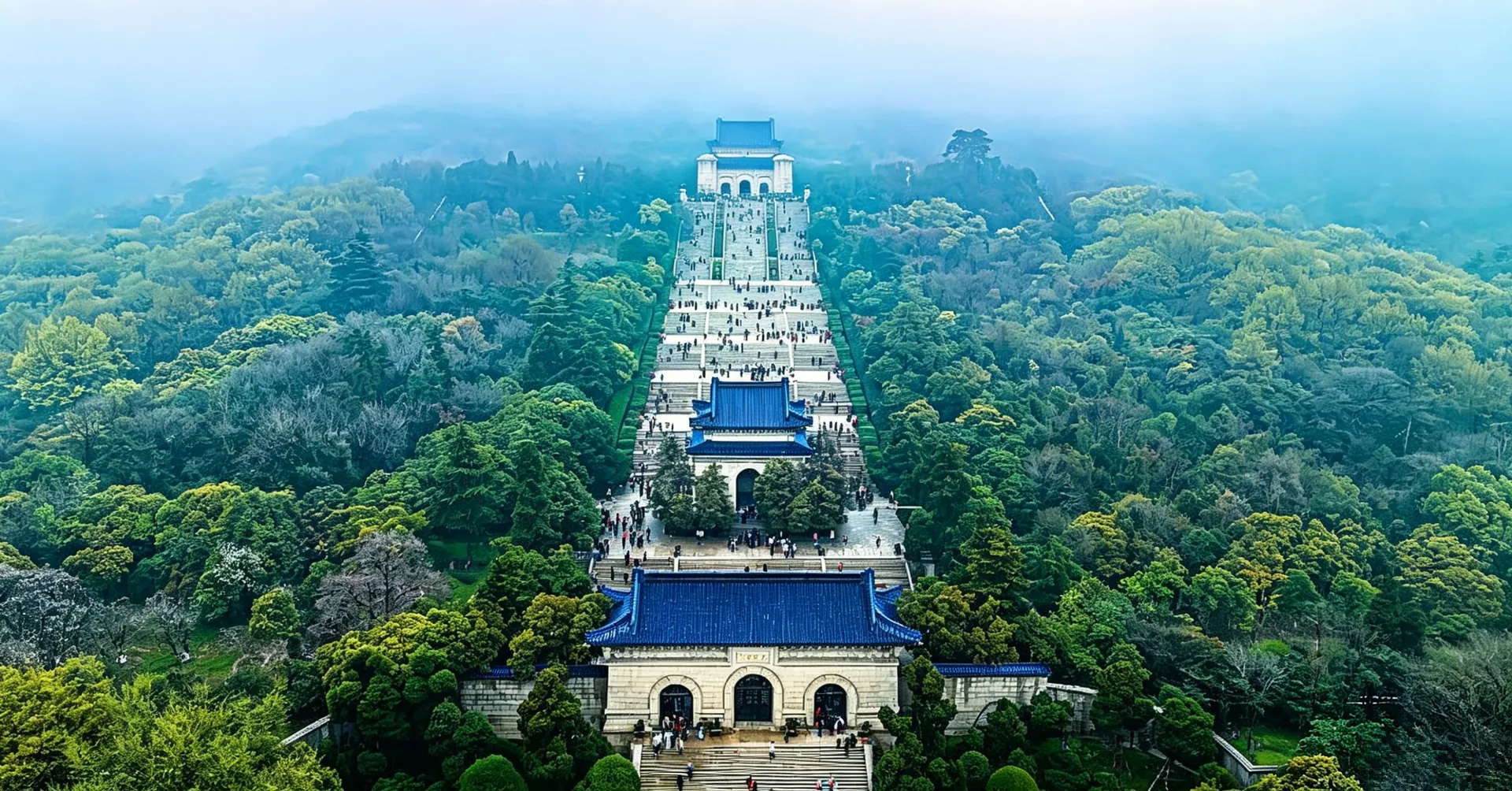
Nanjing has been China's capital six times, and the weight of that history settles into your bones the moment you arrive. The plane trees that arch over the boulevards were planted during the Republic of China era and now form kilometers of green cathedral tunnels. The Ming Dynasty city wall — the l
Where is Nanjing?
Located in East China (Jiangsu) with a population of 9.5 million.
When to Visit - Month by Month
| Month | Temp | Rain | Crowd | Rating | Tips |
|---|---|---|---|---|---|
| Jan | -1~7°C | Low | Low | ★★ | Cold. Few |
| Feb | 1~9°C | Low | Low | ★★ | Spring Festival |
| Mar | 5~14°C | Medium | Medium | ★★★★ | Cherry blossoms |
| Apr | 10~20°C | Medium | High | ★★★★★ | Mild |
| May | 16~26°C | Medium | High | ★★★★ | Warm. May |
| Jun | 21~30°C | High | High | ★★★ | Plum rain |
| Jul | 25~33°C | High | High | ★★ | Hottest. Humid |
| Aug | 25~32°C | High | High | ★★ | Hot. Humid |
| Sep | 19~27°C | Medium | Medium | ★★★★★ | Best month |
| Oct | 12~22°C | Low | High | ★★★★ | Spirit Way colors |
| Nov | 6~15°C | Low | Medium | ★★★ | Autumn leaves |
| Dec | 1~9°C | Low | Low | ★★ | Cold. Damp |
Compare climate with other cities
Attractions - Ranked
Must-See (Don,t Miss These)
Sun Yat-sen Mausoleum
Hilltop mausoleum of Dr. Sun Yat-sen. A 392-step stairway leads to a white marble hall with blue-tiled roof. Located in the forested Zhongshan Scenic Area.
| Detail | Info |
|---|---|
| Open | 8:30 AM - 5 PM (closed Mon) |
| Admission | Free (reserve online) |
| Getting there | Metro Line 2 to Muxuyuan |
| Time needed | 2-3 hours |
Tip: The stairs are divided into manageable platforms. Go early (8:30 AM) to avoid crowds. Combine with Ming Xiaoling.
Ming Xiaoling Mausoleum (Spirit Way)
Tomb of the Ming Dynasty founder (built 1381). The Spirit Way is the highlight - a path lined with 12 pairs of massive stone animals.
| Detail | Info |
|---|---|
| Open | 8:30 AM - 5 PM |
| Admission | 70 yuan |
| Getting there | Metro Line 2 to Muxuyuan |
| Time needed | 2-3 hours |
Tip: Most beautiful in autumn (Oct-Nov) when maple and ginkgo trees turn colors. Enter from the south gate.
Qinhuai River night cruise
Nanjing''s 1,800-year-old cultural heart. The night cruise passes ornate bridges and historic buildings illuminated in gold and red.
| Detail | Info |
|---|---|
| Cruises | 6 PM - 10 PM |
| Admission | 80 yuan (40 min) |
| Getting there | Metro Line 3 to Fuzimiao |
Tip: Book from the Fuzimiao dock. The Wenyuan Bridge view of the river with Confucius Temple is iconic.
Worth a Visit (If You Have Time)
Presidential Palace
90,000 sq meter complex serving as the ROC presidential palace (1927-1949). Blend of Chinese and Western architecture with preserved offices.
| Detail | Info |
|---|---|
| Open | 8:30 AM - 5:30 PM (closed Mon) |
| Admission | 40 yuan |
| Getting there | Metro Line 2 to Xi''anmen |
| Time needed | 2-3 hours |
Tip: Don''t miss the basement air-raid shelter and the Presidential Garden at the back.
Nanjing Museum Republican Hall
One of China''s largest museums. The Republican Hall is a recreated 1930s Nanjing street underground with period shops and trams.
| Detail | Info |
|---|---|
| Open | 9 AM - 5 PM (closed Mon) |
| Admission | Free (reserve online) |
| Getting there | Metro Line 2 to Minggugong |
| Time needed | 3-4 hours |
Tip: Reserve 3-5 days in advance. Head straight to the Republican Hall (B1) before it gets crowded.
Confucius Temple area
Historic Fuzimiao district around the Confucius Temple on the Qinhuai River. Lively lanes packed with food stalls and shops.
| Detail | Info |
|---|---|
| Temple hours | 9 AM - 9 PM |
| Temple fee | 30 yuan |
| Getting there | Metro Line 3 to Fuzimiao |
| Time needed | 2-3 hours |
Tip: Go in the evening when lanterns create a carnival atmosphere. Must-try: duck blood vermicelli soup and salted duck.
Suggested Itineraries
1 Day in Nanjing
| Time | Activity |
|---|---|
| 8:30-10:30 | Sun Yat-sen Mausoleum (climb 392 steps) |
| 10:45-12:30 | Ming Xiaoling - Spirit Way stone animals |
| 12:30-1:30 | Lunch: Nanjing salted duck |
| 2:00-4:00 | Presidential Palace |
| 5:00-6:00 | Confucius Temple area + snacks |
| 7:00-8:30 | Qinhuai River night cruise |
2 Days in Nanjing
| Time | Activity |
|---|---|
| 9:00-12:00 | Nanjing Museum (Republican Hall) |
| 12:30-1:30 | Lunch: duck blood soup |
| 2:00-5:00 | Xuanwu Lake + Jiming Temple |
Day Trips
| Destination | Transport | Time | Why Go |
|---|---|---|---|
| Confucius Temple | Metro 3 | Evening | Night cruise + street food |
| Zhongshan Area | Metro 2 | Full day | Sun Yat-sen + Ming Xiaoling |
Food Guide
Nanjing's cuisine — Jinling cuisine (金陵菜) — is refined, subtle, and duck-obsessed. The city's unofficial motto: "No duck leaves Nanjing alive."
The soul of Nanjing in a bowl. Slivers of congealed duck blood, tofu puffs, vermicelli noodles, duck gizzard, duck liver, and duck intestine all float in a milky-white duck bone broth perfumed with star anise and white pepper. It's complex, deeply savory, and the soup that Nanjing residents name first when asked what you must eat. Add chili oil and black vinegar to taste.
| Restaurant | Area | Notes |
|---|---|---|
| Huiwei (回味鸭血粉丝汤) | Multiple locations | The chain that standardized the dish |
| Jin Yuan (金原鸭血粉丝汤) | Multiple locations | More authentic, richer broth |
A dish of deceptive simplicity. A whole duck is dry-brined with salt, Sichuan pepper, and aromatic spices, then poached in a seasoned broth and chilled. The result: ivory skin, faintly pink flesh, and a clean, pure duck flavor that needs no sauce, no garnish, and no improvement. It's eaten cold, as an appetizer, year-round. Nanjing locals can tell the quality of a salted duck with one glance at the color of the skin.
Nanjing's famous halal-style pan-fried beef dumplings, associated with the Qijiawan (七家湾) neighborhood and its Hui Muslim community. The wrappers are thin, the filling is beef mixed with spring onion and ginger, and the cooking method — pan-fried in a shallow layer of oil, then steamed, then fried again — produces a wrapper that's simultaneously crispy-bottomed, chewy in the middle, and tender on top. Dip in Zhenjiang black vinegar.
| Restaurant | Area | Notes |
|---|---|---|
| Li Ji Qingzhen Guan (李记清真馆) | Near Confucius Temple | The legendary Hui-Muslim restaurant — the beef guotie queue starts at 6:30 AM |
Different from Shanghai's xiaolongbao: the wrapper is slightly thicker, the filling is pork only (no crab), and the folding technique puts the pleat on the bottom. The result is a smooth white dome with a pool of rich, sweet broth inside. The local rhyme for eating them: "Lift gently, move slowly, open a window, drink the soup" (轻轻提,慢慢移,先开窗,后喝汤).
| Restaurant | Area | Notes |
|---|---|---|
| Jiming Soup Dumplings (鸡鸣汤包) | Near Jiming Temple | The namesake; lines form at breakfast |
A breakfast dish with a love story. Legend says this sweet, creamy porridge — made from soy milk, glutinous rice, Chinese yam, and rock sugar — was created for Soong Mei-ling (宋美龄), the Republic of China's elegant First Lady, who was known for her refined palate and careful diet. True or not, the porridge is silky, nourishing, and tastes like the gentlest possible way to start a morning in the old capital.
Where to Stay
| Area | Vibe | Price Range | Best For |
|---|---|---|---|
| Xinjiekou (新街口) | Downtown commercial heart, metro hub, shopping, dining everywhere | ¥300–1,200/night | First-time visitors, transit convenience |
| Confucius Temple & Laomendong (夫子庙/老门东) | Qinhuai River nightlife, Ming/Qing architecture, illuminated cruises at your doorstep | ¥300–1,000/night | Nightlife, atmosphere, river views |
| Zhongshan Scenic Area (钟山风景区) | Mountain resorts, forest air, waking up next to Ming tombs and hiking trails | ¥500–2,000/night | Nature, luxury, mountain tranquility |
Getting Around
| Method | Route / App | Notes |
|---|---|---|
| From Lukou Airport (NKG) | Metro Line S1 → Line 1 or 3 | 60–75 min to city center, ¥8–10 |
| From Lukou Airport (NKG) | Taxi / DiDi | 40–50 min, ¥120–160 |
| High-speed train | Nanjing South (南京南) or Nanjing Station (南京站) | Shanghai Hongqiao → Nanjing: 1 hour, ¥130–150 |
| Metro | Alipay Transport | 11 lines; Lines 1, 2, and 3 cover all major attractions |
| Purple Mountain shuttle | Scenic area buses | ¥10 per trip within the Zhongshan scenic area; connects Sun Yat-sen Mausoleum, Ming Xiaoling, and Linggu Temple |
Unique Experiences
| Experience | Why It's Worth It |
|---|---|
| Qinhuai River night cruise | The painted boats, the red lanterns, the arched stone bridges — Nanjing's night cruise is tourism at its most romantic |
| Walk the Ming City Wall | The Shence Gate to Taiping Gate section is the best-preserved stretch — 6 km along the wall with views over Xuanwu Lake and Purple Mountain. ¥30 entry at Shence Gate |
| Yihe Road cycling (颐和路) | The Republic of China's embassy row — plane-tree-shaded lanes lined with 1930s mansions in a dozen architectural styles. It's quiet, elegant, and feels like a different century |
| Nanjing Museum Republican Hall | Walk into a fully recreated 1930s Nanjing street — the best museum immersion experience in China |
| Tangshan Hot Springs (汤山温泉) | Natural hot springs 25 km east of Nanjing — soak in mineral waters that have drawn visitors since the Tang Dynasty |

Souvenirs
| Souvenir | What It Is | Where to Buy |
|---|---|---|
| Yuhua Stone (雨花石) | Polished agate pebbles in swirling colors — Nanjing's traditional souvenir | Confucius Temple area, stone markets |
| Nanjing Cloud Brocade (南京云锦) | Imperial-grade silk brocade — so named because it looks like clouds woven into fabric; a UNESCO Intangible Heritage | Nanjing Brocade Museum shop |
| Vacuum-Packed Salted Duck (盐水鸭) | Sealed for travel — the taste of Nanjing in your suitcase | Supermarkets, airport stores |
| Jinling Folding Fan (金陵折扇) | Handmade paper and bamboo fans — a Nanjing craft since the Ming Dynasty | Confucius Temple craft shops |
| Qinhuai Pastries (秦淮糕点) | Osmanthus cakes, sesame crisps, and other traditional sweets | Confucius Temple snack shops |
Before You Go - Checklist
Travel Styles
¥45 dorm beds, ¥15 duck blood soup, free Nanjing Museum, ¥10 Ming Xiaoling entry at off-peak. Nanjing is one of the best-value ancient capitals. Full budget guide →
The Nanjing Museum's Republican-era street (a recreated 1930s Nanjing) fascinates kids. Xuanwu Lake pedal boats. Confucius Temple night market. Full family guide →
Education and tech hub. High-speed train hub — 1 hr to Shanghai, 3.5 hrs to Beijing. Presidential Palace and Sun Yat-sen Mausoleum for history between meetings. Full business guide →
Purple Mountain has a scenic shuttle bus. The Ming City Wall's flat sections are walkable. Plane-tree-lined Yihe Road is the most beautiful senior walk in China. Full seniors guide →
Related
Routes: Golden Route | Themed routes Info: Visa | Payment | Internet
Have you been to Nanjing?
What experience would you tell every traveler not to miss?
More Cities to Explore
Suzhou Travel Guide: Classical Gardens, Silk & Canal Towns
The ultimate Suzhou travel guide — nine UNESCO classical gardens, Pingjiang Road canals, silk culture, and nearby water towns. China's 'Venice of the East'.
Xi'an Travel Guide: Terracotta Warriors, Ancient City Wall & Street Food
The ultimate Xi'an travel guide — Terracotta Warriors, cycling the ancient city wall, Muslim Quarter street food, and Tang Dynasty nightlife. Plan your trip to China's historic capital.
Luoyang Travel Guide: Longmen Grottoes, Shaolin Temple & Peony Capital of China
The ultimate Luoyang travel guide for foreigners — the Longmen Grottoes' 100,000 Buddha statues, the Shaolin Temple birthplace of kung fu, the White Horse Temple, and China's most spectacular peony festival.
Get Weekly China Travel Tips
Join our newsletter for destination guides, travel hacks, visa updates, and insider recommendations delivered to your inbox.
No spam. Unsubscribe anytime.