Suzhou — Where Every Window Frames a Painting
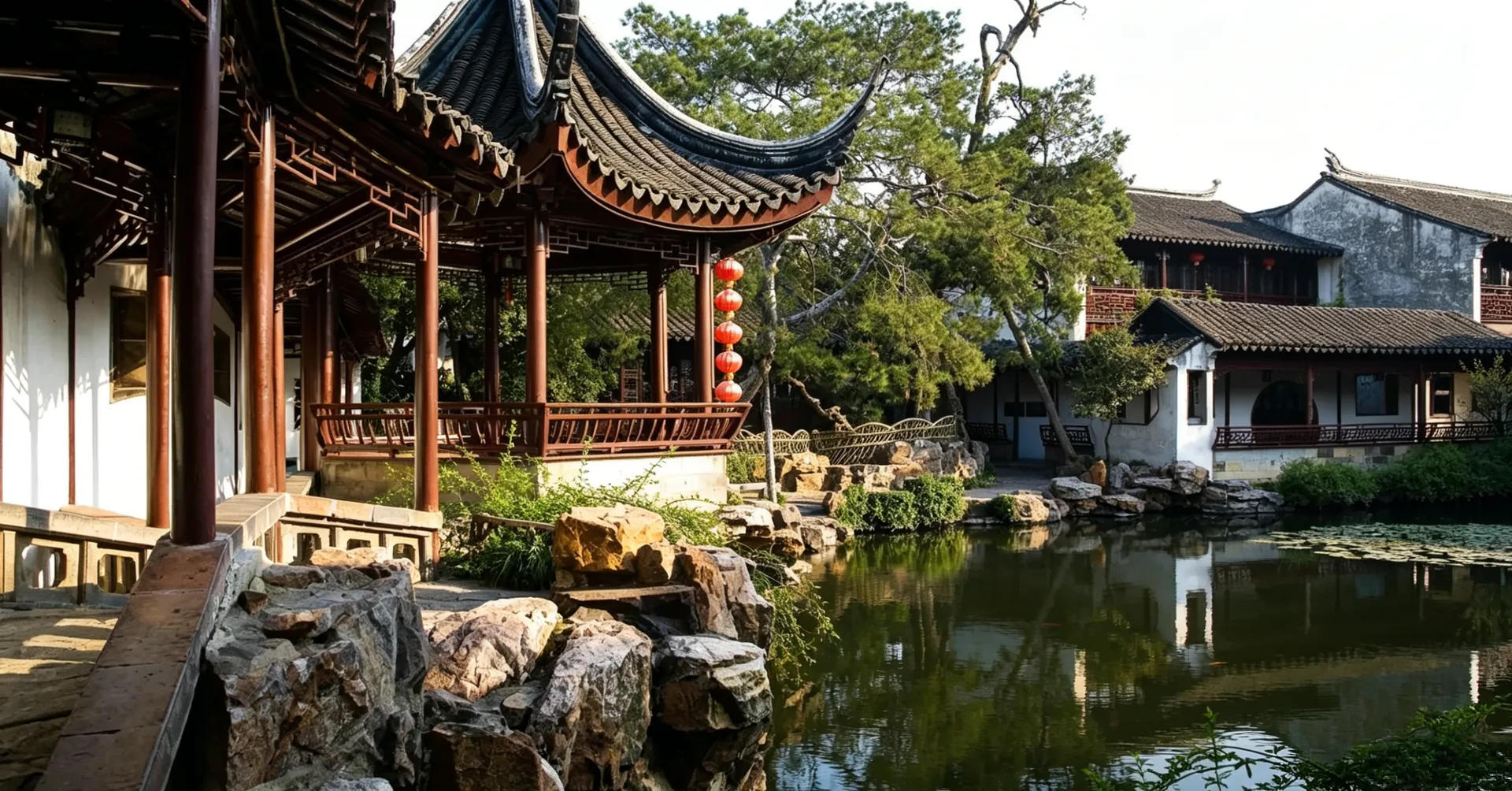
Suzhou doesn't shout. It whispers — through the rustle of bamboo in a 500-year-old garden, the soft slap of an oar on a canal, the distant pluck of a pipa lute from a tea house on Pingjiang Road. This is the city that perfected the art of living beautifully, and it's been doing so for over two mille
Where is Suzhou?
Located in East China (Jiangsu) with a population of 12.8 million.
When to Visit - Month by Month
| Month | Temp | Rain | Crowd | Rating | Tips |
|---|---|---|---|---|---|
| Jan | 0~7°C | Low | Low | ★★ | Few tourists |
| Feb | 2~9°C | Low | Low | ★★ | Spring Festival |
| Mar | 5~14°C | Medium | Medium | ★★★★ | Plum blossoms |
| Apr | 10~19°C | Medium | High | ★★★★★ | Garden season |
| May | 16~25°C | Medium | High | ★★★★ | Warm. May |
| Jun | 21~28°C | High | High | ★★★ | Plum rain |
| Jul | 25~34°C | High | High | ★★ | Hottest. Humid |
| Aug | 25~33°C | High | High | ★★ | Hot. Humid |
| Sep | 20~27°C | Medium | Medium | ★★★★★ | Best month |
| Oct | 14~23°C | Low | High | ★★★★ | Crab season |
| Nov | 8~16°C | Low | Medium | ★★★ | Cool. Quiet |
| Dec | 2~9°C | Low | Low | ★★ | Cold |
Compare climate with other cities
Attractions - Ranked
Must-See (Don,t Miss These)
Humble Administrator,s Garden
China''s most famous classical garden, a UNESCO site. Built in 1509, the 5-hectare garden is a water-centered masterpiece of Ming Dynasty landscape design.
| Detail | Info |
|---|---|
| Open | 7:30 AM - 5:30 PM |
| Admission | 70 yuan (peak) |
| Getting there | Bus 40/55 from Suzhou Station |
| Time needed | 2-3 hours |
Tip: Arrive at 7:30 AM before the crowds. Most beautiful in June-July when lotus ponds bloom. Audio guide (30 yuan) explains the garden symbolism.
Lingering Garden (UNESCO)
One of China''s four most famous classical gardens (1522). Masterful use of space with four distinct themed sections.
| Detail | Info |
|---|---|
| Open | 7:30 AM - 5:30 PM |
| Admission | 55 yuan |
| Getting there | Bus from Suzhou Station |
| Time needed | 1.5-2 hours |
Tip: The garden has four sections - central lotus pond, eastern rockery, northern bonsai, and western hillside. Carved stone windows are a signature feature.
Pingjiang Road canal walk
Suzhou''s most picturesque canal-side street (1.6km) along the Grand Canal. White-walled, black-tiled buildings housing teahouses and boutiques.
| Detail | Info |
|---|---|
| Open | 24/7, free |
| Boat ride | 50 yuan (30 min) |
| Getting there | Metro Line 1 to Xiangmen |
| Time needed | 2-3 hours |
Tip: Go early (9 AM) for a quiet experience or at dusk for lantern-lit atmosphere. Side lanes hide excellent restaurants.
Worth a Visit (If You Have Time)
Tiger Hill & leaning pagoda
Suzhou''s iconic leaning pagoda (47m, tilting 3 degrees) atop a scenic hill. The pagoda dates to 961 AD and leans more than Pisa''s.
| Detail | Info |
|---|---|
| Open | 7:30 AM - 5:30 PM |
| Admission | 70 yuan |
| Getting there | Bus from city center (20 min) |
| Time needed | 2-3 hours |
Tip: You can''t enter the pagoda (unstable), but walk around it for photos. The Sword Pool at the base has a legendary history.
Suzhou Museum (I.M. Pei design)
Stunning museum designed by I.M. Pei (born in Suzhou). Modern Chinese architecture with white walls, grey roofs, and water gardens.
| Detail | Info |
|---|---|
| Open | 9 AM - 5 PM (closed Mon) |
| Admission | Free (reserve online) |
| Getting there | Adjacent to Humble Garden |
| Time needed | 1.5-2 hours |
Tip: Reserve tickets 2-3 days ahead on the official WeChat account. The building itself is the main attraction.
Tongli water town day trip
Best-preserved ancient water town near Suzhou (25km). 55 bridges, Ming and Qing residences. More authentic than Zhouzhuang.
| Detail | Info |
|---|---|
| Open | 8 AM - 5 PM |
| Admission | 100 yuan (combined) |
| Getting there | Metro Line 4 to Tongli |
| Time needed | Half-day |
Tip: Stay overnight for the magical early morning experience. The Retreat & Reflection Garden inside is a UNESCO site.
Suggested Itineraries
1 Day in Suzhou
| Time | Activity |
|---|---|
| 7:30-9:30 | Humble Administrator's Garden (opening time) |
| 10:00-11:30 | Suzhou Museum (I.M. Pei) |
| 12:00-1:00 | Lunch: Suzhou noodles |
| 1:30-3:00 | Pingjiang Road canal walk |
| 3:30-5:00 | Lingering Garden |
| 5:30-7:00 | Tiger Hill + leaning pagoda |
| 7:30-9:00 | Dinner: squirrel mandarin fish |
2 Days in Suzhou
| Time | Activity |
|---|---|
| 9:00-4:00 | Tongli water town day trip (boat ride) |
| 5:00-7:00 | Guanqian Street shopping + night market |
Day Trips
| Destination | Transport | Time | Why Go |
|---|---|---|---|
| Tongli | Metro 4 45m | Half-day | Venice of East, 55 bridges |
| Humble Garden | Walk | Half-day | Classical garden + museum |
Food Guide
Suzhou cuisine — part of Jiangsu's great culinary tradition — is delicate, subtly sweet, and deeply seasonal. It's food for poets and scholars, not warriors.
Suzhou's signature dish and a test of knife skills: a whole mandarin fish is filleted in a crosshatch pattern, battered, deep-fried until the flesh opens like a blooming flower, and draped in a glossy sweet-sour sauce. The crosshatching is cut so fine that when the dish arrives, the fish looks like a squirrel's bushy tail — hence the name.
| Restaurant | Area | Notes |
|---|---|---|
| Songhelou (松鹤楼) | Guanqian Street | Founded 1757; the historic standard-bearer of Suzhou cuisine |
| De Yue Lou (得月楼) | Guanqian Street | Founded in the Ming Dynasty (16th century); arch-rival of Songhelou |
The seasonal obsession that grips eastern China every autumn (September–November). Yangcheng Lake hairy crabs are celebrated for their sweet, delicate flesh and rich, golden roe. They're traditionally steamed and eaten with Zhenjiang vinegar and shredded ginger. This is not a quick meal — locals spend an hour dissecting a single crab with surgical precision.
The breakfast of Suzhou. Two styles: red soup (红汤 / hóngtāng), made with soy sauce and pork bone broth; or white soup (白汤 / báitāng), a clear, delicate broth. Either is topped with your choice of jiāotóu (浇头 / toppings) — slices of braised pork belly, shrimp, smoked fish, bamboo shoots, or seasonal greens. The noodles are thin, springy, and served alu dente.
The dish announces itself before you taste it: shredded freshwater eel is stir-fried in dark soy and sugar, placed on a plate, topped with minced garlic and scallions, and then — at the table — a ladle of smoking-hot oil is poured over it. The oil sizzles and spits, the garlic blooms, and the eel is ready. Rich, aromatic, and theatrically served. A Suzhou specialty.
A cold appetizer that's pure Suzhou elegance. Sections of lotus root are stuffed with glutinous rice, then slow-poached in a syrup of rock sugar and osmanthus flowers. When sliced, each translucent ochre round reveals a star-shaped pattern of white rice filling. Sweet, floral, tender — and beautiful on the plate.
Where to Stay
| Area | Vibe | Price Range | Best For |
|---|---|---|---|
| Pingjiang Road & Guanqian Street (平江路/观前街) | Historic canal lanes, boutique guesthouses in converted courtyard homes, walk to everything | ¥400–1,500/night | First-time visitors, atmosphere seekers |
| Jinji Lake (金鸡湖) | Suzhou's modern face — glass skyscrapers, luxury hotels, lakeside promenade, the Suzhou of the 21st century | ¥600–2,500/night | Luxury, business, modern aesthetics |
| Tongli or Zhouzhuang Water Towns (同里/周庄) | Canal-side inns in ancient water towns — wake up to mist on the water and ducks gliding past your window | ¥300–800/night | Romance, photography, water town immersion |
Getting Around
| Method | Route / App | Notes |
|---|---|---|
| From Shanghai | High-speed train (Shanghai Hongqiao → Suzhou Station) | 25 minutes, ¥40–70; departures every 15–30 minutes |
| From Shanghai | High-speed train → Suzhou North Station | ¥35–55; North Station is farther from the old city |
| Metro | Alipay Transport | 5 lines; Line 1 serves the old city; Line 4 connects Suzhou Station |
| Old City Transport | Walking + shared bike + pedicab (人力三轮车) | The old city has vehicle restrictions; the best way to explore the garden-and-canal core is on foot |
Unique Experiences
| Experience | Why It's Worth It |
|---|---|
| Pingtan performance in a canal-side tea house | A singer with a pipa lute, a pot of Biluochun green tea, and the soft Suzhou dialect — an hour of pure atmosphere. Pipa Yu Teahouse (琵琶语) is the famous one |
| Hand-rowed canal boat | The canals look different from water level. Boats operate on Pingjiang Canal and Shantang Street. ¥40–80 per person for a 20–30 minute ride. The boatman may sing a Suzhou folk song |
| Suzhou Silk Museum or No.1 Silk Factory | Suzhou has been China's silk capital for 1,500 years. See silkworms at work, watch silk being reeled, and understand why this fabric mesmerized the Roman Empire. The museum is free |
| Kunqu Opera at a Garden Theater | Kunqu (昆曲) — one of China's oldest opera forms, originating in Suzhou — is performed in garden settings during spring and autumn. The Humble Administrator's Garden sometimes hosts evening performances |
| Tongli or Zhouzhuang water town overnight | Both water towns are 30–40 minutes from Suzhou. Zhouzhuang is more famous and commercial; Tongli is quieter and more authentic. Stay overnight — after the day-trippers leave at 5 PM, the canals belong to you |

Souvenirs
| Souvenir | What It Is | Where to Buy |
|---|---|---|
| Suzhou Embroidery (苏绣) | One of China's four great embroidery traditions — double-sided silk embroidery so fine it looks like painting | Suzhou Embroidery Research Institute shop, Pingjiang Road |
| Suzhou Silk (苏州丝绸) | Scarves, pajamas, robes — mulberry silk from the source | Suzhou Silk Museum shop, No.1 Silk Factory |
| Sandalwood Fan (檀香扇) | Carved sandalwood folding fans — fragrant, delicate, a Suzhou tradition | Pingjiang Road shops, craft stores |
| Taohuawu Woodblock Prints (桃花坞年画) | Folk New Year prints in vivid colors — a Suzhou folk art tradition | Taohuawu area shops |
| Jujube Paste Sesame Cake (枣泥麻饼) | Sweet, dense cakes filled with jujube paste — a classic Suzhou sweet | Guanqian Street bakeries |
Before You Go - Checklist
Travel Styles
¥50 dorm beds, ¥15 noodle soup, ¥10 garden entry (off-peak). Most Suzhou gardens are ¥45–80. Walk the old city canals for free. Full budget guide →
Pingjiang Road canal walk is pushchair-friendly. Hand-rowed canal boats delight young children. The Silk Museum shows silkworms at work. Full family guide →
Major manufacturing hub — 25 min from Shanghai by train. Stay near Jinji Lake for modern business facilities. Day trip: Humble Administrator's Garden between meetings. Full business guide →
Classical gardens are designed for seated contemplation. Pingjiang Road is flat. 25 min from Shanghai — an easy day trip without luggage. Full seniors guide →
Related
Routes: Golden Route | Themed routes Info: Visa | Payment | Internet
Have you been to Suzhou?
What experience would you tell every traveler not to miss?
More Cities to Explore
Nanjing Travel Guide: Ancient Capital, Ming Dynasty Tombs & Qinhuai River
The ultimate Nanjing travel guide — Sun Yat-sen Mausoleum, Ming Xiaoling, Qinhuai River night cruise, duck blood soup, and the most beautiful plane tree boulevards in China.
Hangzhou Travel Guide: West Lake, Longjing Tea & Zen Temples
The ultimate Hangzhou travel guide — misty West Lake, Lingyin Temple, tea picking in Longjing Village, and silk culture. Discover Marco Polo's 'City of Heaven'.
Harbin Travel Guide: Ice and Snow Festival, Russian Architecture & Winter Magic
The ultimate Harbin travel guide — Ice and Snow World wonderland, Saint Sophia Cathedral, Central Street, hearty northeast cuisine, and the world's biggest winter festival.
Get Weekly China Travel Tips
Join our newsletter for destination guides, travel hacks, visa updates, and insider recommendations delivered to your inbox.
No spam. Unsubscribe anytime.