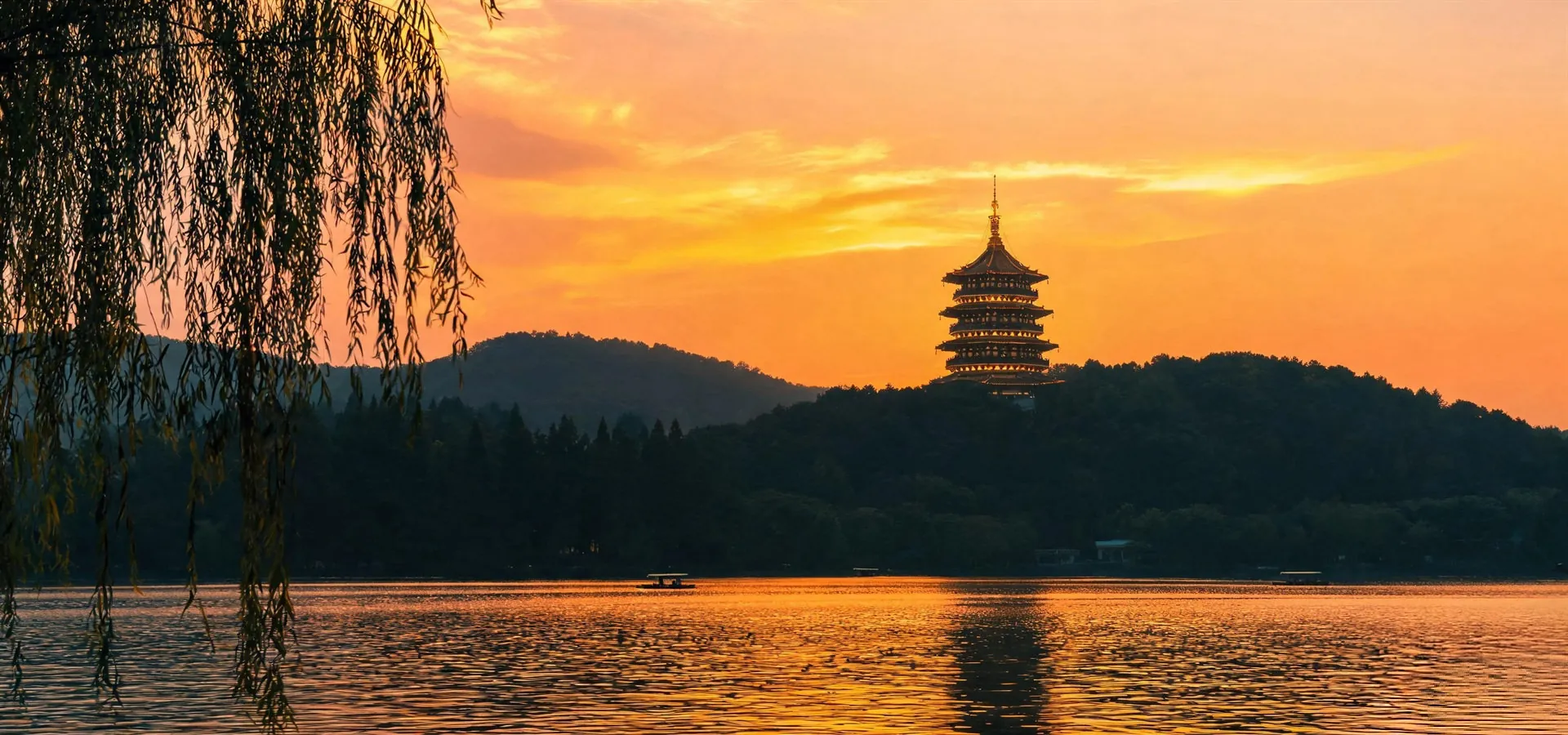
Hangzhou — Heaven on Earth, According to Everyone Who's Been
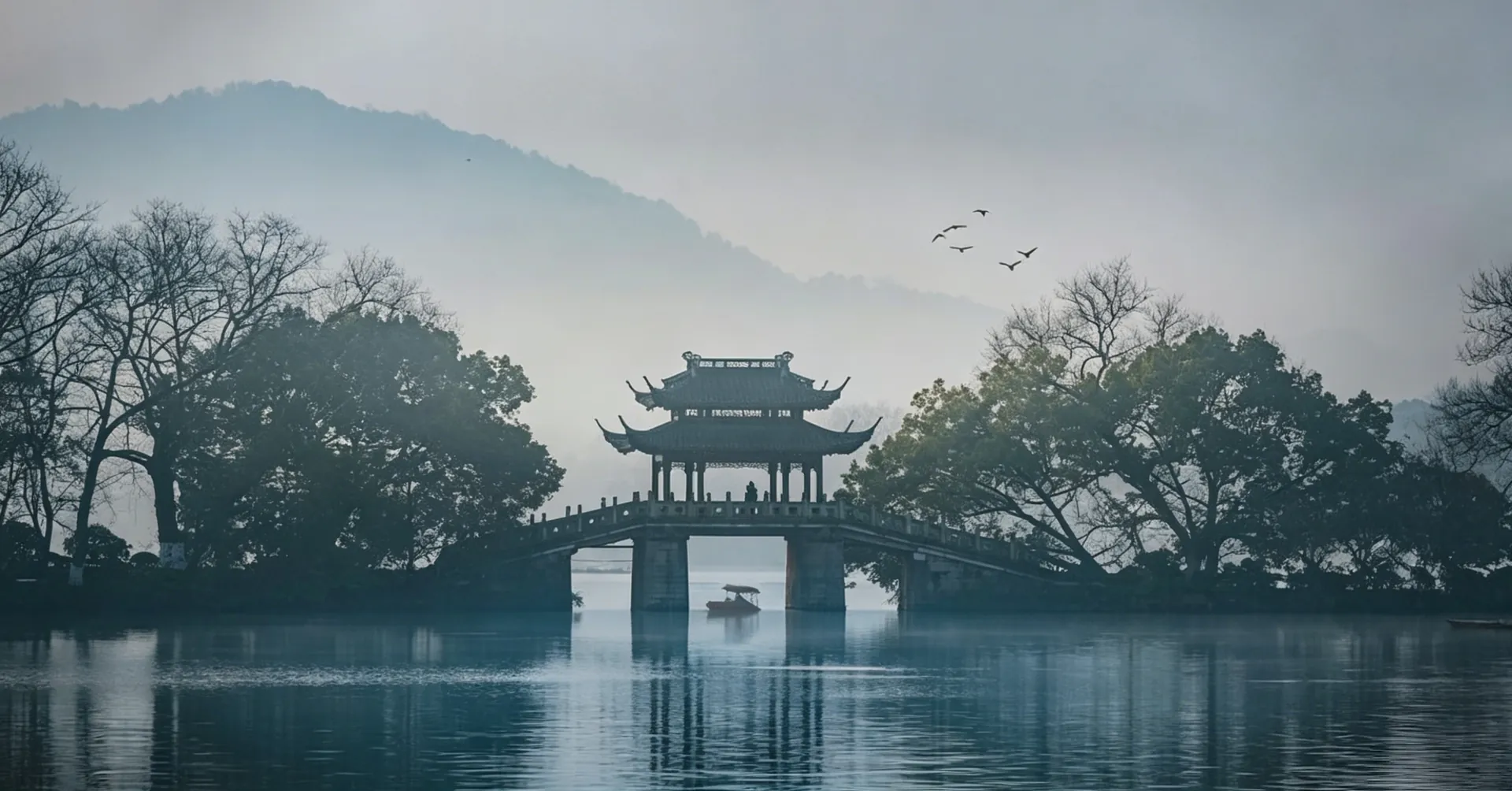
Marco Polo called it "the City of Heaven, the most beautiful and magnificent in the world." Chinese poets have been trying to capture West Lake in words for over a thousand years and still come up short. The proverb says it plainly: **"Above there is heaven; below there are Suzhou and Hangzhou"** (上
Where is Hangzhou?
Located in East China (Zhejiang) with a population of 12.2 million.
When to Visit - Month by Month
| Month | Temp | Rain | Crowd | Rating | Tips |
|---|---|---|---|---|---|
| Jan | 1~8°C | Low | Low | ★★ | Cold. Damp |
| Feb | 2~10°C | Low | Low | ★★ | Still cold |
| Mar | 6~14°C | Medium | Medium | ★★★★ | Cherry blossoms |
| Apr | 11~20°C | Medium | High | ★★★★★ | Mild. Tomb Sweeping |
| May | 17~27°C | Medium | High | ★★★★ | Warm. May holiday |
| Jun | 22~30°C | High | High | ★★★ | Plum rain. Humid |
| Jul | 26~35°C | High | High | ★★ | Hottest. Humid |
| Aug | 26~33°C | High | High | ★★ | Hot. Typhoon risk |
| Sep | 21~28°C | Medium | Medium | ★★★★★ | Best. Osmanthus |
| Oct | 15~24°C | Low | High | ★★★★ | Golden autumn |
| Nov | 9~17°C | Low | Medium | ★★★ | Cool. Autumn |
| Dec | 3~10°C | Low | Low | ★★ | Cold. Quiet |
Compare climate with other cities
Attractions - Ranked
Must-See (Don,t Miss These)
West Lake (bike or walk the causeway)
China''s most famous lake, a UNESCO site. The 15km lakeshore is lined with willow trees, pagodas, and ancient causeways. Best explored by bike or unhurried walk.
| Detail | Info |
|---|---|
| Open | 24/7, free |
| Getting there | Metro Line 1 to Longxiangqiao |
| Route | Bai Causeway to Su Causeway (2h) |
Tip: Walk the Su Causeway at dawn (6-7 AM) when morning mist hangs over the water. Take the boat to Lesser Paradise Island for the iconic view.
Lingyin Temple & grottoes
One of China''s most important Buddhist temples (1,700 years old). Set in a lush valley with the Feilai Feng cliffs carved with hundreds of ancient stone grottoes.
| Detail | Info |
|---|---|
| Open | 7 AM - 6 PM |
| Admission | 45 + 45 yuan (combined) |
| Getting there | Bus 7/407 from West Lake |
| Time needed | 2-3 hours |
Tip: Buy the combined ticket including Feilai Feng grottoes - they''re the highlight. Climb behind the main hall for valley views.
Longjing tea village tour
The birthplace of Longjing (Dragon Well) tea. Terraced tea fields on hills around the village. Join a tasting at a local farmhouse.
| Detail | Info |
|---|---|
| Best season | Late March-April |
| Admission | Free; tastings 20-50 yuan |
| Getting there | Bus 27 from West Lake |
| Time needed | 2-3 hours |
Tip: Go in late March-April for the spring harvest. Buy tea directly from farmhouses - avoid tourist shops at the village entrance.
Worth a Visit (If You Have Time)
Xixi National Wetland Park
China''s first national wetland park - 10 sq km of ponds, reed beds, canals, and villages. Explore by boat, spotting migratory birds and lotus blooms.
| Detail | Info |
|---|---|
| Open | 8 AM - 5:30 PM |
| Admission | 80 yuan (includes boat) |
| Getting there | Metro Line 3 to Xixi Wetland |
| Time needed | 3-4 hours |
Tip: Take the electric boat for a relaxed overview. Visit June-July for lotus flowers or October-November for autumn reeds.
Grand Canal water bus
Hangzhou''s section of the 1,794km Beijing-Hangzhou Grand Canal. The water bus runs from Wulin Men to Gongchen Bridge along a historic canal. Only 3 yuan.
| Detail | Info |
|---|---|
| Fare | 3 yuan |
| Route | Wulin Men to Gongchen Bridge (30 min) |
| Getting there | Metro Line 1 to Wulin Square |
Tip: Take Line 1 from Wulin Men to Gongchen Bridge. The Gongchen Bridge area has a nice museum and good food.
Six Harmonies Pagoda
13-story wooden pagoda built in 970 AD on the Qiantang River. Climb to the top for stunning river views. The pagoda was originally built as a lighthouse.
| Detail | Info |
|---|---|
| Open | 8 AM - 5:30 PM |
| Admission | 20 yuan |
| Getting there | Bus 4/39 from West Lake |
| Time needed | 1 hour |
Tip: Visit in September for the Qiantang River tidal bore - the pagoda is the best viewing spot.
Suggested Itineraries
1 Day in Hangzhou
| Time | Activity |
|---|---|
| 7:00-9:00 | West Lake walk - Su Causeway at dawn |
| 9:30-11:30 | Lingyin Temple + Feilai Feng grottoes |
| 12:00-1:00 | Lunch: Dongpo pork at Louwailou |
| 1:30-3:00 | Longjing tea village + tea tasting |
| 3:30-5:00 | Xixi Wetland boat ride |
| 5:30-6:30 | Six Harmonies Pagoda sunset |
| 7:00-8:30 | Grand Canal water bus dinner cruise |
2 Days in Hangzhou
| Time | Activity |
|---|---|
| 9:00-12:00 | China National Silk Museum |
| 12:30-1:30 | Lunch: Songsaoyutang |
| 2:00-5:00 | Zhejiang University campus + Zijingang |
Day Trips
| Destination | Transport | Time | Why Go |
|---|---|---|---|
| Xixi Wetland | Metro 3 | Half-day | Lotus boat ride |
| Qiandao Lake | Bus 2h | Full day | Thousand-island lake |
Food Guide
Hangzhou cuisine — one of Zhejiang's great culinary traditions — is delicate, subtly sweet, and deeply seasonal. It's food for poets, not warriors.
The dish that defines Hangzhou. A freshwater grass carp is poached and draped in a glossy sauce of black Zhenjiang vinegar and sugar — sweet, tangy, and deeply savory, with the caramel-like depth that only black vinegar can deliver. The fish is served whole at the table, and the cheeks are the most prized morsel.
| Restaurant | Area | Notes |
|---|---|---|
| Lou Wai Lou (楼外楼) | West Lake (Gushan Island) | Founded 1848; the most famous restaurant in Hangzhou, on a tiny island in the lake |
| Zhi Wei Guan (知味观) | Hubin / Multiple locations | More accessible; excellent renditions of all classic Hangzhou dishes |
Named after Su Dongpo — the Song Dynasty poet-governor who built the Su Causeway and wrote some of China's greatest verse while governing Hangzhou. Pork belly is braised in Shaoxing wine, soy sauce, and rock sugar until the fat reaches a state of collapse — it quivers when you touch it with chopsticks and dissolves on your tongue like meat-flavored silk.
Freshwater river shrimp, shelled and briefly stir-fried with tender young Longjing tea leaves. The tea infuses the shrimp with a faint, grassy fragrance — the dish is the color of jade and tastes like a Hangzhou spring morning. Served in tiny porcelain spoons. Spring (March–April), when both the shrimp and the tea leaves are at their youngest, is the ideal season.
Hangzhou's iconic bowl of noodles. Wheat noodles in a clear, rich broth with paper-thin slices of pork, pickled mustard greens (xuecai), and tender bamboo shoot slivers. It's the city's breakfast of choice for over a century — a ¥15 bowl that tastes like grandmotherly comfort and Hangzhou soul.
| Restaurant | Area | Notes |
|---|---|---|
| Kui Yuan Guan (奎元馆) | Downtown Hangzhou | Founded 1867; the noodle institution of record |
A street snack with a story. According to legend, the dish symbolizes the hated traitor Qin Hui (who framed the loyal general Yue Fei) — you "wrap him up" in dough and "press him flat" in a hot iron griddle. Politics aside, it's delicious: a crispy thin pancake wrapping a youtiao (fried dough stick) and scallions, pressed and grilled until the outside crackles. ¥5–8 at street stalls around the lake.
Where to Stay
| Area | Vibe | Price Range | Best For |
|---|---|---|---|
| West Lake North Road & Lakeside (北山路/湖滨) | Historic hotels, lake views from the window, walking distance to everything | ¥600–2,500/night | First-time visitors, romance, photographers |
| Lingyin & Baile Bridge (灵隐/白乐桥) | Zen guesthouses in temple valley, tea terraces, babbling streams, forest quiet | ¥300–1,200/night | Meditation, nature lovers, couples |
| Wulin Square (武林广场) | Downtown commercial hub, metro nexus, modern city convenience | ¥300–1,000/night | Budget travelers, transit convenience |
| Xixi Wetland (西溪湿地) | Resort hotels inside the wetland park, water views, complete seclusion | ¥800–2,000/night | Escapists, luxury seekers |
Getting Around
| Method | Route / App | Notes |
|---|---|---|
| From Xiaoshan Airport (HGH) | Metro Line 19 | 30 min to East Railway Station area, ¥9 |
| From Xiaoshan Airport (HGH) | Taxi / DiDi | 40–60 min, ¥120–180 |
| Metro | Alipay Transport or Hangzhou Tong card | 13 lines; Metro Line 1 connects the lake area to the train stations |
| Public Bike (小红车) | Street-side dock stations, Alipay or transit card | First hour free; ¥1/hour after. Stations everywhere around the lake |
| Lake bus | Routes 7, 51, 52 loop around the lake | ¥2; connects major scenic spots |
Unique Experiences
| Experience | Why It's Worth It |
|---|---|
| Cycle Su Causeway at sunrise | The 2.8 km of arched stone bridges and peach trees, with the lake on both sides, is one of China's great urban experiences. By 7 AM, you have it almost to yourself |
| Tea-picking in Longjing | Several tea farms welcome visitors for a hands-on experience — pick, roast, and brew your own Longjing tea. Spring (March–April) is harvest season |
| Hand-rowed boat on West Lake | The ¥150/hour boatmen double as storytellers — they know every legend, every poem, and exactly where the best reflections are at each time of day |
| Song Dynasty Town & Hanfu (宋城) | A Song Dynasty-themed park with period streets, performances, and costume rentals. The Romance of the Song Dynasty stage show is spectacular if you're open to theme-park energy |
| Gongchen Bridge Museum Walk | Three free museums — Umbrella, Fan, and Knife/Scissors/Sword — in architecturally striking buildings. The umbrella museum, in particular, is unexpectedly moving |
Souvenirs
| Souvenir | What It Is | Where to Buy |
|---|---|---|
| West Lake Longjing Tea (西湖龙井) | The most famous green tea in China — buy from the source in Longjing or Meijiawu Village after tasting | Longjing Village tea farms, Hefang Street tea shops |
| Hangzhou Silk (杭州丝绸) | Scarves, pajamas, robes, and fabrics — Hangzhou has been China's silk capital for a millennium | Hangzhou Silk Market (杭州丝绸市场), Hefang Street, Wulin Road shops |
| Zhang Xiaoquan Scissors (张小泉剪刀) | Hand-forged scissors — a Hangzhou craft since 1663; elegant and functional | Hefang Street, department stores |
| Wang Xing Ji Fan (王星记扇子) | Handmade silk and sandalwood folding fans — a Hangzhou art form since 1875 | Wang Xing Ji flagship store, Hefang Street |
| White Chrysanthemum Tea (杭白菊) | Dried white chrysanthemum flowers for tea — floral, soothing, and Hangzhou's other famous brew | Tea shops, supermarkets |
Before You Go - Checklist
Travel Styles
¥50 dorm beds, free West Lake walking path, ¥15 bowl of pian er chuan noodles. Most of Hangzhou's beauty is free. Full budget guide →
West Lake paddle boats, Lingyin Temple's forest trails, and Longjing tea village make Hangzhou a gentle, green family escape. Full family guide →
Alibaba's headquarters city. Stay near West Lake. The best business lunch is dongpo rou (braised pork) at Lou Wai Lou on the lake. 45 min from Shanghai by train. Full business guide →
West Lake has flat, paved, bench-lined paths. Golf carts available. The lakeside tea houses define slow travel. China's most senior-accessible scenic city. Full seniors guide →
Related
Routes: Golden Route | Themed routes Info: Visa | Payment | Internet
Have you been to Hangzhou?
What experience would you tell every traveler not to miss?
More Cities to Explore
Suzhou Travel Guide: Classical Gardens, Silk & Canal Towns
The ultimate Suzhou travel guide — nine UNESCO classical gardens, Pingjiang Road canals, silk culture, and nearby water towns. China's 'Venice of the East'.
Guangzhou Travel Guide: Cantonese Food, Canton Tower & Lingnan Culture
The ultimate Guangzhou travel guide — authentic dim sum, claypot rice, the iconic Canton Tower, historic Shamian Island, and Lingnan culture. Eat like a local in China's culinary capital.
Shenzhen Travel Guide: Tech Hub, Theme Parks & Coastal Escapes
The ultimate Shenzhen travel guide — OCT-LOFT creative district, Window of the World, Dapeng ancient fortress, coastal hiking, and the world's largest electronics market.
Get Weekly China Travel Tips
Join our newsletter for destination guides, travel hacks, visa updates, and insider recommendations delivered to your inbox.
No spam. Unsubscribe anytime.