China Food Tour – Best Culinary Routes for Foreigners
Every region of China tastes completely different. A bowl of noodles in Lanzhou has nothing in common with a steamer of dim sum in Guangzhou. The Sichuan peppercorn numbs your mouth in ways no other spice does. The cumin-scented lamb skewers of Xi'an's Muslim Quarter taste more like Central Asia than East Asia. This is a country where you can eat three meals a day for a month and never repeat a cuisine.
These four routes are designed around food. Each city on each route was chosen because eating there is an experience you'll remember longer than any temple or tower.

Route 1: Sichuan Food Trail (8 Days)
Chengdu → Leshan → Chongqing
The holy grail of Chinese food tourism. Sichuan cuisine is the country's most internationally beloved — and eating it at the source is a revelation. The málà (麻辣) sensation — numbing Sichuan peppercorn + chili fire — is only half the story. The other half is the sheer variety: from delicate tea-smoked duck to rustic twice-cooked pork.
| Day | City | Eat |
|---|---|---|
| 1–3 | Chengdu | Hot pot (蜀大侠/小龙坎), dan dan noodles, mapo tofu, Sichuan opera with tea. Morning: Panda Base. Afternoon: People's Park tea house |
| 4 | Leshan | Leshan Giant Buddha (71m, world's tallest). Lunch: Leshan's sweet-skinned duck and qiaojiao beef (跷脚牛肉) — both local specialties worth the day trip |
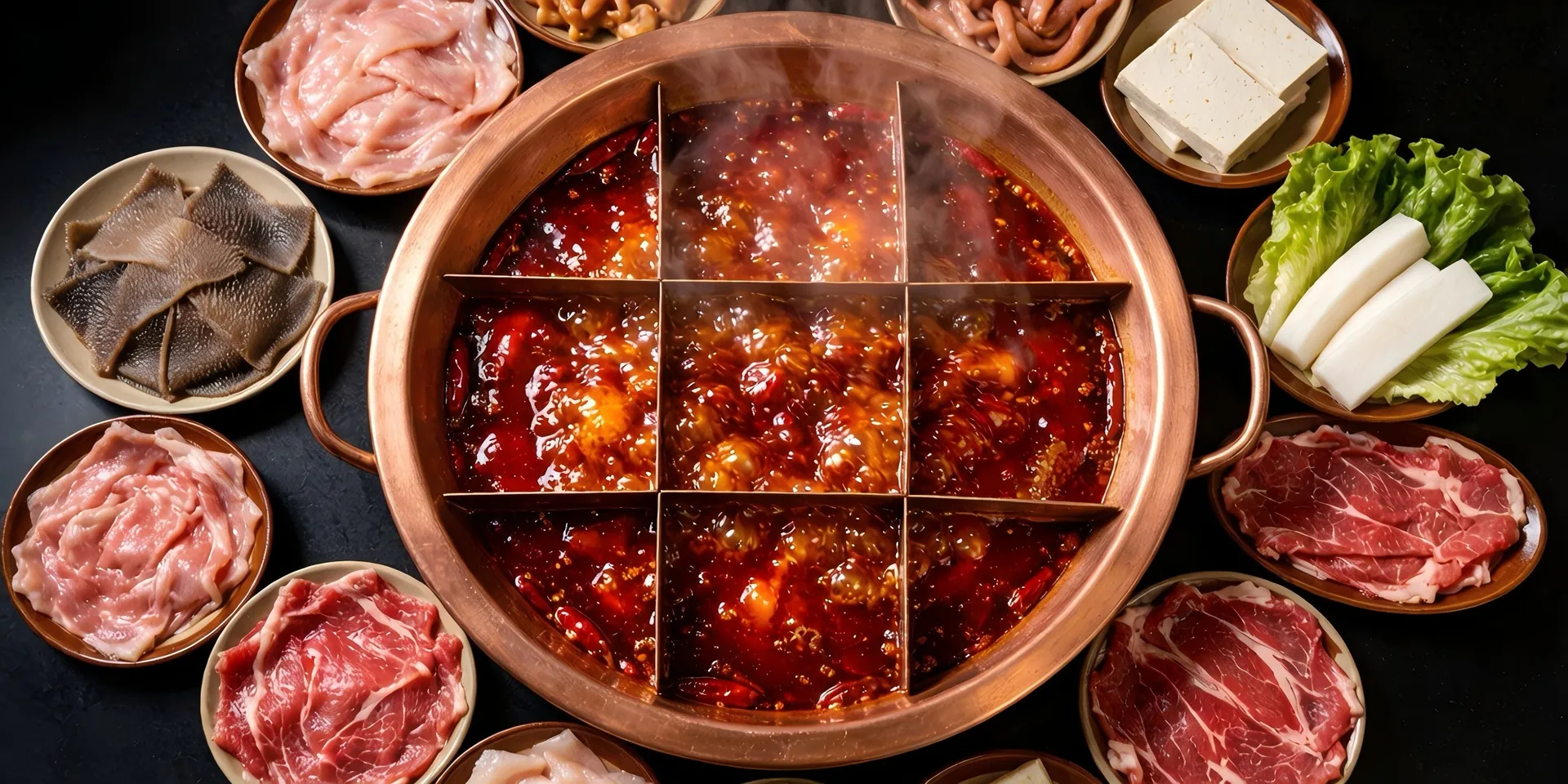
| 5–8 | Chongqing | Chongqing hot pot (九宫格 nine-square grid, beef tallow broth), xiaomian (breakfast noodles), maoxuewang (duck blood curd cauldron), riverside night market skewers |

Route 2: Cantonese & Dim Sum Tour (6 Days)
Guangzhou → Shenzhen → Hong Kong
Cantonese cuisine is about freshness. The ideal ingredient was alive this morning. The ideal cooking technique is steaming — doing as little as possible to impeccable raw materials. This route traces the Pearl River Delta's dim sum, roast goose, and seafood culture from Guangzhou to Hong Kong.
| Day | City | Eat |
|---|---|---|
| 1–3 | Guangzhou | Morning dim sum at Panxi Jiujia (泮溪酒家), white-cut chicken, claypot rice with lap cheong sausage, sweet double-skin milk at Nanxin. Visit Qingping Medicine Market for culinary herbs |
| 4 | Shenzhen | Chaoshan beef hot pot at Baheli (八合里), Guangming roasted pigeon. OCT-LOFT for post-lunch creative cafés |
| 5–6 | Hong Kong (via high-speed rail, 15 min from Shenzhen) | Tim Ho Wan (the cheapest Michelin-starred dim sum), roast goose at Yat Lok, dai pai dong street stalls, egg waffles, milk tea |

Route 3: Northern Classics (10 Days)
Beijing → Xi'an → Lanzhou
Northern Chinese food is wheat, lamb, and fire. The noodles are hand-pulled. The bread is stuffed with spiced meat. The skewers are dusted with cumin and blasted over charcoal. This route follows the old imperial and Silk Road trade routes — where the food is as hearty as the winters.
| Day | City | Eat |
|---|---|---|
| 1–3 | Beijing | Peking duck (Dadong or Siji Minfu), zhajiangmian (fried sauce noodles), Mongolian hot pot, jidan guanbing (breakfast crêpes) |
| 4–5 | Xi'an | Yangrou paomo (hand-torn bread in lamb soup), roujiamo (Chinese hamburger), biangbiang noodles, lamb skewers in the Muslim Quarter |
| 6–10 | Lanzhou (fly or high-speed train) | Lanzhou beef noodles (the original, eaten at 7 AM), niangpi (cold skin noodles), lamb shouzhua (hand-grasped lamb). Day trips to Xiahe (Tibetan Labrang Monastery) and Bingling Temple Grottoes |
Route 4: Yunnan Ethnic Food Tour (7 Days)
Kunming → Dali → Lijiang
Yunnan's food is China's most biodiverse — wild mushrooms, edible flowers, exotic herbs, and the culinary traditions of 25 ethnic minorities. This is where you'll eat things you've never seen before and love them instantly.
| Day | City | Eat |
|---|---|---|
| 1–2 | Kunming | Crossing-the-bridge noodles (过桥米线), steam pot chicken, wild mushroom hot pot (Jun–Sep only). Zhuanxin Farmers Market for a breakfast crawl |
| 3–4 | Dali (2 hrs by train) | Bai minority cuisine: rushan (grilled goat cheese), erkuai (rice cakes), Dali beer, lake fish from Erhai. The old town's Foreigner Street has surprisingly good Western brunch if you need a break |
| 5–7 | Lijiang (2 hrs by train) | Naxi minority baba (stuffed flatbreads), Yak meat hot pot, Lijiang baijiu (local spirit). Day trip to Shuhe Ancient Town for quieter food lanes |

Must-Try Dishes by City
| City | Dish 1 | Dish 2 | Dish 3 |
|---|---|---|---|
| Beijing | Peking Duck (北京烤鸭) | Zhajiang Noodles (炸酱面) | Mongolian Hot Pot (涮羊肉) |
| Xi'an | Yangrou Paomo (羊肉泡馍) | Roujiamo (肉夹馍) | Biangbiang Noodles (面) |
| Chengdu | Mapo Tofu (麻婆豆腐) | Dan Dan Noodles (担担面) | Sichuan Hot Pot (四川火锅) |
| Chongqing | Chongqing Hot Pot (重庆火锅) | Xiaomian (小面) | Maoxuewang (毛血旺) |
| Guangzhou | Dim Sum (点心) | White-Cut Chicken (白切鸡) | Claypot Rice (煲仔饭) |
| Kunming | Crossing Noodles (过桥米线) | Mushroom Hot Pot (菌子火锅) | Steam Pot Chicken (汽锅鸡) |
Food Safety Tips for Foreigners
| Tip | Detail |
|---|---|
| Tap water | Not safe. Drink bottled or boiled water. Ice in reputable restaurants is fine — skip it from street stalls |
| Street food | Busy stalls with high turnover are safest — food cooks in front of you, no time for bacteria |
| Wild mushrooms (Yunnan) | Only eat at reputable restaurants with trained chefs. Never forage yourself |
| Peanuts & peanut oil | Extremely common in Chinese cooking. Carry an allergy card in Chinese if allergic |
| Spice adjustment | "Bù là" (不辣) = no spicy. "Wēi là" (微辣) = mild. In Sichuan/Chongqing, "mild" is still hot |
| Wash produce | Wash fruits and vegetables with bottled or boiled water before eating raw |
Dietary Restriction Guide
| Diet | Chinese Term | What to Know |
|---|---|---|
| Vegetarian | 素食 (sùshí) | Buddhist temple restaurants are your safest bet. Assume minced pork or lard in "vegetable" dishes at regular restaurants unless specified |
| Vegan | 纯素 (chúnsù) | More difficult — dairy is rare in Chinese cooking, but eggs and meat stock are common. Temple restaurants are best |
| Halal | 清真 (qīngzhēn) | Look for the green-and-white halal sign. Hui Muslim restaurants are widespread; Lanzhou beef noodle chains are reliably halal |
| Gluten-Free | 无麸质 (wú fūzhì) | Challenging — soy sauce contains wheat, wheat noodles are universal. Rice-based southern cuisine (Guangdong, Yunnan) is easier. Carry a detailed allergy card |
| Peanut Allergy | 花生过敏 (huāshēng guòmǐn) | Peanuts and peanut oil are ubiquitous. Print an allergy card. Sesame oil is also extremely common |
Frequently Asked Questions
Which Chinese city has the best food?
Chengdu is widely considered China's best food city — it was the first Asian city designated a UNESCO City of Gastronomy. The combination of Sichuan cuisine's bold flavors, a deep street food culture, and a population that treats eating as a daily art form makes it unbeatable. Guangzhou (Cantonese dim sum and seafood) and Xi'an (Silk Road noodles and lamb) are close behind.
Is Chinese street food safe to eat?
Yes — if you follow one rule: eat where the locals eat. A street stall with a long queue of Chinese customers has high turnover, meaning ingredients are fresh and nothing sits out long. Avoid stalls that are empty, especially during peak meal times. The risk is old oil and food sitting out, not "exotic" ingredients. Food cooked to order in front of you is generally safe.
Can I find vegetarian food in China?
Yes, especially at Buddhist temple restaurants, which have a 1,500-year vegetarian culinary tradition. In regular restaurants, however, assume that "vegetable" dishes may contain minced pork or lard. The phrase "Wǒ chī sù" (我吃素 / "I eat vegetarian") helps — but specifying Buddhist vegetarian (我吃斋 / Wǒ chī zhāi) is clearer, as it implies no animal products of any kind.
Your Table Is Ready
Chinese food at the source is a completely different experience from Chinese food abroad. The Sichuan peppercorn numbs differently. The dim sum is fresher. The noodle dough is pulled minutes before it hits your bowl. These four routes are just the beginning — every province, every city has its own culinary identity. Start with one. Come back hungry.
What's the best thing you've eaten in China?
Was it a ¥5 jianbing from a Beijing street cart, or a 12-course Cantonese banquet? Share your best China food memory in the comments. Also check our Golden Route and city food guides for more.
Related Routes
Ancient China History Tour – Following the Dynasties
Walk through 3,000 years of Chinese history. Four curated history routes covering imperial capitals, the Great Wall, ancient water towns, and UNESCO World Heritage sites.
China Nature & Landscape Tour – Mountains, Rivers & Gorges
Explore China's most breathtaking landscapes. Five curated nature routes covering Guilin karst, Zhangjiajie Avatar mountains, sacred peaks, Yunnan highlands, and Jiuzhaigou's turquoise lakes.