Qingdao — Where Germany Meets the Sea, and Beer Is Always Fresh
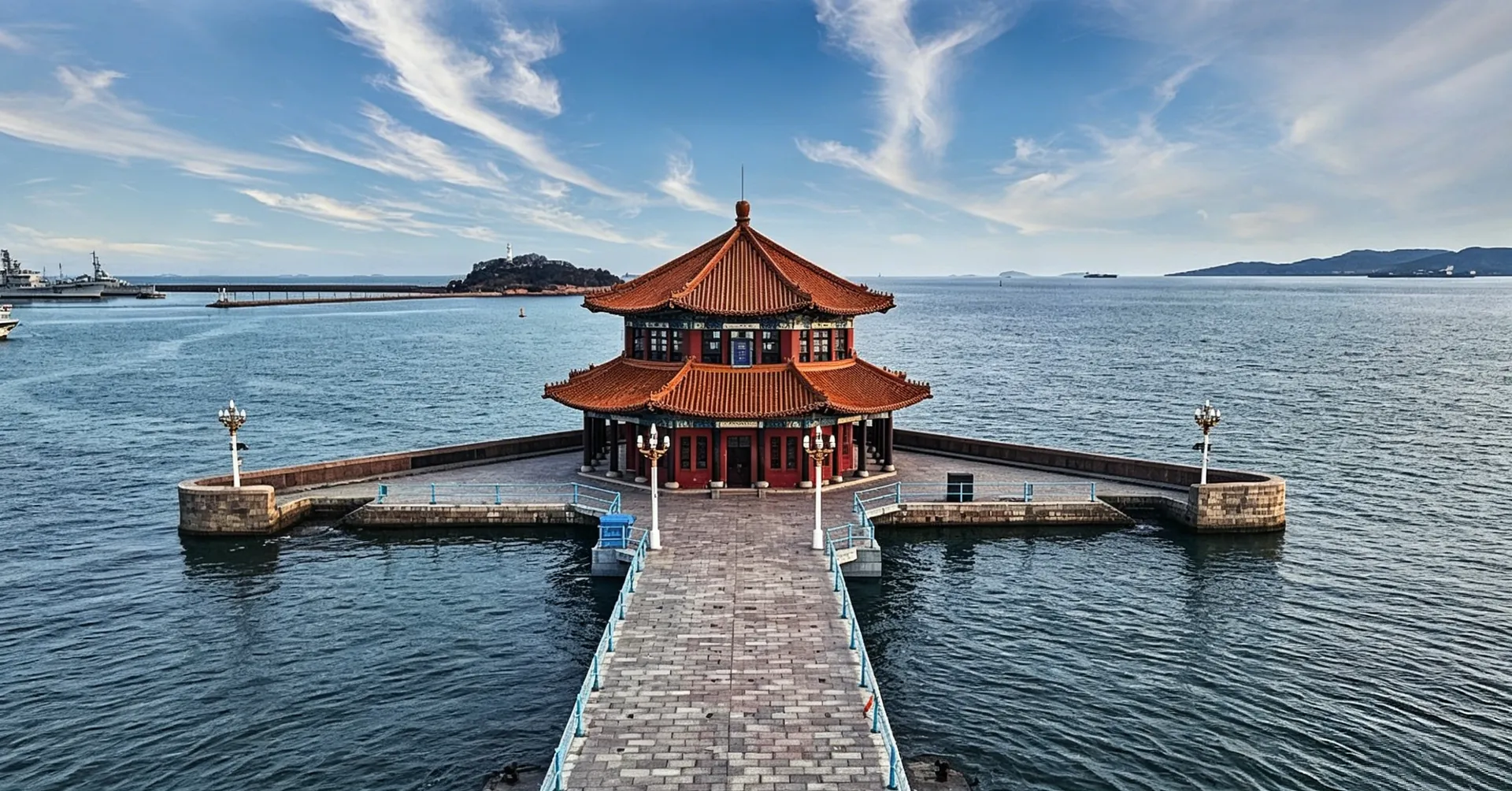
Qingdao doesn't feel like the rest of China — and that's the point. In 1897, Germany leased this fishing village on the Shandong Peninsula and transformed it into a model colonial port with cobblestone streets, Bavarian-style mansions, and a brewery that would become Tsingtao, China's most famous be
Where is Qingdao?
Located in East China (Shandong) with a population of 10.1 million.
When to Visit - Month by Month
| Month | Temp | Rain | Crowd | Rating | Tips |
|---|---|---|---|---|---|
| Jan | -3~3°C | Low | Low | ★★ | Few tourists |
| Feb | -1~5°C | Low | Low | ★★ | Spring Festival |
| Mar | 3~10°C | Low | Medium | ★★★★ | Spring begins |
| Apr | 8~16°C | Low | Medium | ★★★★ | Cherry blossoms |
| May | 14~22°C | Medium | Medium | ★★★★ | Warm. May |
| Jun | 20~26°C | Medium | High | ★★★ | Beach season |
| Jul | 24~30°C | High | High | ★★★ | Beer Festival |
| Aug | 24~29°C | High | High | ★★★ | Peak tourism |
| Sep | 20~25°C | Low | Medium | ★★★★★ | Best month |
| Oct | 14~20°C | Low | Medium | ★★★★ | Golden autumn |
| Nov | 7~12°C | Low | Low | ★★★ | Cool. Quiet |
| Dec | 0~5°C | Low | Low | ★★ | Winter charm |
Compare climate with other cities
Attractions - Ranked
Must-See (Don,t Miss These)
Tsingtao Beer Museum & fresh draft
China''s most famous beer, founded by Germans in 1903. The museum is in the original brewery. Best part: the fresh draft beer tasting at the end - only available here.
| Detail | Info |
|---|---|
| Open | 8 AM - 5:30 PM |
| Admission | 60 yuan (includes 2 beers) |
| Getting there | Metro Line 2 to Lijiang Road |
| Time needed | 1.5-2 hours |
Tip: The VIP ticket (80 yuan) gives extra samples. The unfiltered fresh draft is a completely different experience from bottled Tsingtao.
Badaguan European villa district
Eight streets named after ancient mountain passes, lined with 300+ villas in 24 European architectural styles. Perfect for strolling and photography.
| Detail | Info |
|---|---|
| Open | 24/7, free |
| Getting there | Bus 26/31 from Qingdao Station |
| Time needed | 2-3 hours |
Tip: Princess House at Juyongguan Road 10 is the most photographed villa. Best in April (cherries) or Oct-Nov (autumn colors).
Zhanqiao Pier
Qingdao''s most recognizable landmark - a 440m stone pier built in 1892 extending into the Yellow Sea. The octagonal Huilan Pavilion at the end is the city symbol.
| Detail | Info |
|---|---|
| Open | 24/7, free |
| Best time | Sunset |
| Getting there | Walk from Qingdao Station (10 min) |
| Time needed | 30-45 min |
Tip: Best photo is from the beach to the west of the pier. Visit at sunset when the sky turns orange over the sea.
Worth a Visit (If You Have Time)
Laoshan Mountain & Taoist temples
Coastal mountain range rising to 1,133m. Important Taoist center for 2,000+ years with ancient temples. Unique feature: the mountain meets the sea.
| Detail | Info |
|---|---|
| Open | 7 AM - 5:30 PM |
| Admission | 120-180 yuan |
| Getting there | Bus 104 from Qingdao (1.5h) |
| Time needed | Full day |
Tip: The south route (Nankou) is most scenic with coastal views and the Taiqing Temple. Take the cable car up and walk down.
Olympic Sailing Center
Built for the 2008 Olympics sailing events. Now Qingdao''s premier waterfront area with the Olympic torch tower, restaurants, bars, and sailing experiences.
| Detail | Info |
|---|---|
| Open | 24/7, free |
| Sailing | 100-200 yuan/person |
| Getting there | Metro Line 2 to Gaoxiong Road |
| Time needed | 1-2 hours |
Tip: Best in late afternoon when the sun glistens off the water. In August, the area hosts the Qingdao Beer Festival.
Xiaoyushan Park viewpoint
Small hilltop park offering the single best panoramic view of Qingdao - red roofs, blue sea, curved coastline, and Zhanqiao Pier all in one frame.
| Detail | Info |
|---|---|
| Open | 6 AM - 8 PM |
| Admission | 15 yuan |
| Getting there | Walk from Qingdao University |
| Time needed | 30-60 min |
Tip: The 15-minute climb is easy. Go at sunset for golden light on the red roofs.
Suggested Itineraries
1 Day in Qingdao
| Time | Activity |
|---|---|
| 9:00-11:00 | Tsingtao Beer Museum + fresh draft |
| 11:30-12:30 | Badaguan villa district walk |
| 1:00-2:00 | Zhanqiao Pier |
| 2:30-5:00 | Laoshan Mountain cable car |
| 5:30-7:00 | Olympic Sailing Center sunset |
| 7:30-9:00 | Seafood dinner + beer on beer street |
2 Days in Qingdao
| Time | Activity |
|---|---|
| 9:00-12:00 | Xiaoyushan Park + Qingdao Art Museum |
| 12:30-1:30 | Lunch: seafood dumplings |
| 2:00-5:00 | Beach day at Golden Beach |
Day Trips
| Destination | Transport | Time | Why Go |
|---|---|---|---|
| Laoshan | Bus 104 | Full day | Coastal mountain + temples |
| Jiaozhou Bridge | Bus 40m | Half-day | Longest sea bridge |
Food Guide
Qingdao's Shandong cuisine heritage meets fresh seafood from the Yellow Sea — and everything tastes better with a glass of cold draft beer.
The quintessential Qingdao dish. Tiny, sweet local clams (gala, in the local dialect) are flash-fried in a screaming-hot wok with dried chili, garlic, ginger, and a splash of beer. They arrive piled on a plate, shells glistening, and you eat them with your fingers, prying each open to reveal the tender morsel inside. Best consumed on a plastic stool at a sidewalk restaurant with a glass of draft beer at your elbow.
Where to eat: Dengzhou Road Beer Street (登州路啤酒街) has the highest concentration of clam-and-beer joints; Taidong Night Market (台东夜市) is the local favorite.
Shandong is dumpling country, and Qingdao's seafood dumplings are the local evolution. The most iconic varieties:
| Dumpling | Filling | Description |
|---|---|---|
| Mackerel Dumplings (鲅鱼水饺) | Fresh Spanish mackerel, pork, chives | The Shandong classic — delicate, oceanic, silky |
| Cuttlefish Dumplings (墨鱼水饺) | Cuttlefish, pork, ink-infused black wrapper | Dramatic, briny, visually stunning |
| Seafood Medley (海鲜全家福) | Shrimp, scallop, fish, pork — mixed | A little of everything in one bite |
| Restaurant | Area | Notes |
|---|---|---|
| Chuange Fish Dumplings (船歌鱼水饺) | Multiple locations | The modern standard-bearer; colorful dumplings, English-friendly |
A Qingdao lunch institution. Pork ribs are slow-braised until the meat threatens to fall off the bone, served in a deep bowl with the braising liquid and a mound of plain white rice on the side. It costs ¥15–25, and you'll see office workers hunched over bowls of it in every neighborhood eatery at noon. Not photogenic. Absolutely delicious.
Long, thin-skinned dumplings filled with pork, shrimp, or leek-and-egg, arranged in a pan, fried until the bottoms form a lacy golden crust, then flipped onto a plate in one dramatic piece. The textural contrast — crispy bottom, tender filling, chewy top — is the point. Dip in black vinegar with shredded ginger.
It deserves its own entry on this list because it's genuinely a different beverage from any Tsingtao you've tasted before. Unpasteurized, unfiltered, alive with yeast, served at ~4°C in a chilled glass. It's cloudy, slightly sweet, creamy on the palate, and must be consumed within 24 hours of production. The only place to drink it in meaningful quantity is Qingdao. In plastic bags. From street-side dispensers. This is not a joke — Qingdao residents buy draft beer by weight, carried home in clear plastic bags with a straw.
Where to Stay
| Area | Vibe | Price Range | Best For |
|---|---|---|---|
| Old Town & Zhanqiao (老城区/栈桥) | Historic buildings, walking distance to the pier, cathedral, and Badaguan | ¥300–1,200/night | First-time visitors, atmosphere, history |
| Badaguan & Taipingjiao (八大关/太平角) | Quiet villa district, tree-lined streets, boutique hotels in heritage buildings | ¥500–1,800/night | Romance, architecture lovers, peace |
| May Fourth Square & Olympic Sailing Center (五四广场/奥帆中心) | Modern skyline, waterfront hotels, sea-view rooms, nightlife | ¥500–2,000/night | Sea views, modern comfort, evening walks |
| Laoshan District (崂山区) | Mountain + sea resort hotels, hot springs, hiking access | ¥400–1,500/night | Nature, spa, mountain getaways |
Getting Around
| Method | Route / App | Notes |
|---|---|---|
| From Jiaodong Airport (TAO) | Metro Line 8 → transfer to Line 1 or 3 | ~1 hour to city center, ¥7–9 |
| From Jiaodong Airport (TAO) | Taxi / DiDi | 50–70 min, ¥150–200 |
| Metro | Alipay Transport | 7 lines; Line 3 runs along the coast connecting most attractions |
| Coastal bus | Routes along the shore | ¥2; the scenic window seat route (especially Route 26) |
| Walking | Old Town, Badaguan, and the waterfront | These neighborhoods are compact, flat, and made for walking — put the map away |
Unique Experiences
| Experience | Why It's Worth It |
|---|---|
| Qingdao International Beer Festival (8月) | The largest beer festival in Asia — multiple venues, the biggest at the West Coast Golden Beach (金沙滩) in Huangdao. German, Belgian, craft, and of course Tsingtao. Book hotels months ahead |
| Drink raw beer at the source | The Beer Museum's raw beer is the connoisseur's choice. For the populist version: buy draft from a street-side dispenser, served in a plastic bag with a straw (¥5–10 for 1.5 liters). Drink it on the beach, as locals do |
| Sailing at the Olympic Marina | Take a beginner sailing lesson, charter a small yacht, or just walk the marina at sunset and watch the racing yachts return to port |
| Laoshan Taiqing sunrise | The temple opens early, and the view of the first light hitting the Yellow Sea from a 2,000-year-old Taoist courtyard is worth the 5 AM wake-up |
| Tide-pooling at low tide | At Zhanqiao Pier and Shilaoren Beach, locals hunt for crabs, sea urchins, and clams in the exposed tidal flats. Join them — it's the Qingdao equivalent of picking mushrooms in Yunnan |

Souvenirs
| Souvenir | What It Is | Where to Buy |
|---|---|---|
| Tsingtao Beer Merchandise | Branded glasses, bottle openers, T-shirts, limited-edition bottles | Beer Museum gift shop (best selection) |
| Laoshan Green Tea (崂山绿茶) | Grown on Laoshan's sea-facing slopes — minerally, vegetal, uniquely influenced by the maritime microclimate | Tea shops in Laoshan's Taiqing area |
| Jimo Old Wine (即墨老酒) | A Shandong yellow rice wine aged in clay jars — sweeter and richer than Shaoxing wine | Local supermarkets, specialty shops |
| Dried Seafood (海产品干货) | Dried shrimp, dried scallops, dried clam meat — concentrated umami for cooking | Local markets, Seafood Market near Zhanqiao |
Before You Go - Checklist
Travel Styles
¥50 dorm beds, ¥6 draft beer in a plastic bag, ¥15 spicy clams. Qingdao is a budget-friendly seaside escape. Full budget guide →
Golden beaches, the Beer Museum (surprisingly family-friendly), and Laoshan Mountain's cable car make this a great summer family destination. Full family guide →
Major port city and manufacturing center. Jiaodong Airport (TAO) has international connections. Client dinners at a seaside seafood restaurant. Full business guide →
Flat coastal promenades, Badaguan villa district walks, and Laoshan cable car. Sea air and German-era architecture at a relaxed pace. Full seniors guide →
Related
Routes: Golden Route | Themed routes Info: Visa | Payment | Internet
Have you been to Qingdao?
What experience would you tell every traveler not to miss?
More Cities to Explore
Xiamen Travel Guide: Gulangyu Island, Beaches & Minnan Culture
The ultimate Xiamen travel guide — car-free Gulangyu Island, coastal cycling, Nanputuo Temple, Shapowei art district, and delicious Minnan cuisine. China's most romantic island city.
Zhuhai Travel Guide: Islands, Chimelong Ocean Kingdom & Coastal Charm
The ultimate Zhuhai travel guide — explore the world's largest ocean theme park, island-hop in the South China Sea, cycle the longest coastal road, and see the Hong Kong-Zhuhai-Macao Bridge.
Hangzhou Travel Guide: West Lake, Longjing Tea & Zen Temples
The ultimate Hangzhou travel guide — misty West Lake, Lingyin Temple, tea picking in Longjing Village, and silk culture. Discover Marco Polo's 'City of Heaven'.
Get Weekly China Travel Tips
Join our newsletter for destination guides, travel hacks, visa updates, and insider recommendations delivered to your inbox.
No spam. Unsubscribe anytime.